The Rise And Fall Of FMW
The full history of Atsushi Onita's FMW
.jpg&w=3840&q=75)
May 12, 2026

The full history of Atsushi Onita's FMW
May 12, 2026
To your average fan, hardcore wrestling begins and ends with ECW, the Paul Heyman-helmed industry changing federation that burned out quicker than a flaming table but left a lasting impression on Vince McMahon and Eric Bischoff as the Monday Night Wars threatened to go feral.
Just as WWF and WCW noticed what ECW was doing and changed things up, Heyman himself changed ECW from a regional NWA affiliate into the land of broken dreams and kendo sticks after watching in awe at what Atsushi Onita was doing in Japan with FMW.
Whilst hardcore weapon-filled wrestling had existed since the 1950s and was popular in its own right in the 1970s and 1980s, Onita turned it into a phenomenon, a genuine stadium-packing attraction, fuelled by insane stipulations, death defying spectacles, and the cult of personality that surrounded Onita himself.
With Onita as the driving force creatively and physically, FMW would become the third biggest promotion in Japan in the mid-1990s, but would spectacularly disintegrate, leaving broken promises, broken bodies, and broken families in its wake.
Atsushi Onita is FMW and FMW is Atsushi Onita, but before he was the exploding barbed wire king of wrestling, he was Atsushi Onita, the junior heavyweight ace of All Japan Pro Wrestling.
A student of the legendary Giant Baba, Onita was the first true graduate of the All Japan dojo in the mid-1970s, joining the dojo as a teenager after dropping out of high school, hoping he could support his family with a career as a pro wrestler. After graduating, Onita enjoyed several years wrestling on All Japan undercards before being sent on excursion with tag team partner Masanobu Fuchi at the end of the decade.
After a disastrous stop in the Dominican Republic, which involved a brash Onita not doing business in the proper manner with a local booker and being beaten up backstage, the pair would wind up in Amarillo, Texas under the watchful eye of the legendary Terry Funk, one of Onita’s heroes, and something of a god in Japanese wrestling.
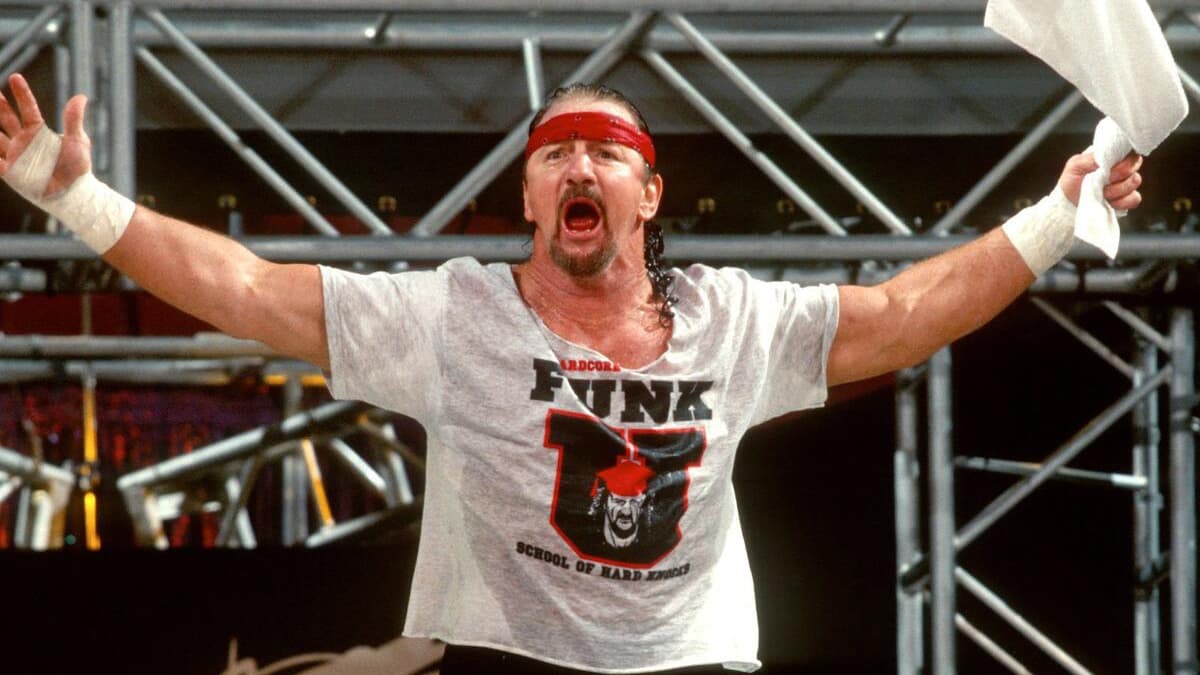
Funk set Onita and Fuchi up with his contacts in Memphis, and the two would dive right into the deep end, embracing the wild Southern brawling style whilst tangling with the likes of Jerry Lawler and Bill Dundee with things becoming especially wild during a concession stand brawl against ‘Hot Stuff’ Eddie Gilbert and Ricky Morton in 1981.
Onita and Fuchi would return to All Japan in 1982, and with rival New Japan in the midst of a junior heavyweight boom thanks to the likes of Tiger Mask, Dynamite Kid, and Tatsumi Fujinami, Onita was chosen to head up All Japan’s admittedly inferior junior heavyweight scene.
Giant Baba took Onita under his wing as his protege early on, and allegedly considered legally adopting Onita as his son at one point such was the bond between the two. It seemed inevitable that Onita would one day be pushed as one of the top stars of All Japan, alongside fellow dojo graduates Genichiro Tenryu and Jumbo Tsuruta.
However, a series of injuries would curtail Onita’s career. He’d blow his knee out and shatter the kneecap after slipping on some water in 1983 and, despite coming back a year later, he was no longer the same wrestler and was forced to retire in January 1985.
Baba made sure that Onita was taken care of financially, but after a series of bad investments, Onita was broke, working a series of odd jobs and even spending some time in jail. Quite simply, he needed to be involved in professional wrestling again or die trying.
After working behind the scenes in women’s promotion JWP Joshi Puroresu, Onita would return to the ring after four years in the wilderness to take on Ryuma Go at a Pioneer Senshi show on April 30, 1989, but the wrestling landscape was changing in Japan.
In the mid-1980s, several New Japan stars left to form the UWF - Universal Wrestling Federation, a shoot-style wrestling promotion that sought to look as real as possible, existing in a sphere between pro wrestling and MMA before the latter properly existed. In 1989, the always shy and retired Onita turned up to a UWF show uninvited and offered to fight any of their stars, but was promptly kicked out because he didn’t have a ticket.
Onita, though, turned this into the UWF being afraid of him and the press lapped it up. Undeterred, Onita then challenged renowned karate competitor Masashi Aoyagi to a fight. The match went down at a World Karate Association event in Korakuen Hall in July 1989, but Onita was disqualified after using wrestling moves. He also proceeded to wail on Aoyagi afterwards, setting up a rematch.
For the rematches, Onita would establish a hybrid wrestling promotion of his own in Frontier Martial-Arts Wrestling and Onita and Aoyagi would face off in the main event of FMW’s first two shows in October 1989, with public interest high after a wild and violent press conference which saw Onita beaten to a bloody pulp.
An FMW dojo was set up to help train the undercard with a focus on joshi wrestlers, whilst wrestling journalist and future Kai-En-Tai leader Wally Yamaguchi helped source talent and had some of his own students like Gedo and Jado help out the fledgling group, although neither would sign. Onita would also reach out to former All Japan rostermate Tarzan Goto to corner him for his first rematch against Aoyagi.
The shows were legitimate sell-outs, with Onita finally defeating Aoyagi on night two after losing the first match due to Goto throwing in the towel. Seeing that the events were an overwhelming financial and commercial success, Onita met with co-founders Kazuyoshi Osako and Mickey Ibargi, and the decision was made to keep FMW going, with the hopes of lasting at least another year.
Initially designed to be a hybrid wrestling/martial arts promotion, FMW soon started to change focus, a decision that would make them a ton of money but set a dangerous precedent in the process.
Needing to up the ante and further differentiate FMW from the rest of the Japanese wrestling scene, Onita and Goto took on karate practitioners Mitsuhiro Matsunaga and Jerry Blayman - aka WCW’s Jerry Flynn - in a Barbed Wire Deathmatch in late 1989, reportedly the first match of its kind in Japan.
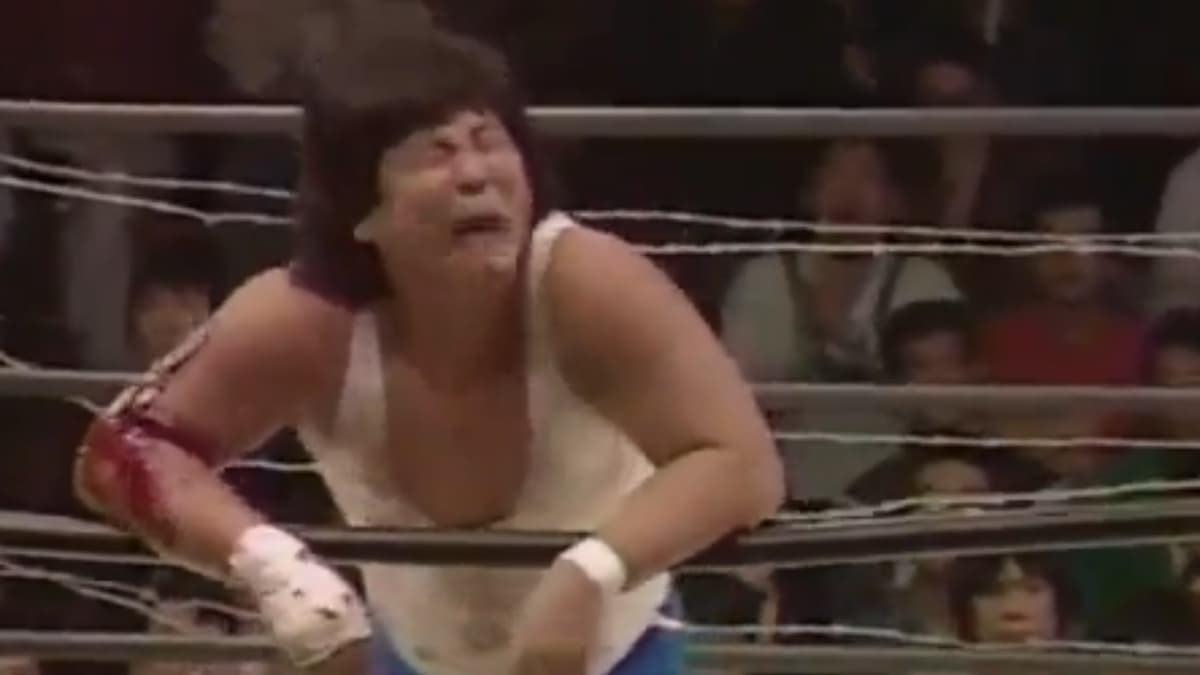
Onita had the idea from his excursion, and during the course of the match would be kicked into the barbed wire, with his biceps bleeding profusely as a result. The fans in attendance were thrilled, and FMW were onto something big. Soon after, the martial arts aspect of the company was significantly toned down as the bloodshed increased.
Unable to secure a major TV deal due to the content of their shows, FMW garnered word of mouth notoriety, building a rabid cult-like audience in the process. With business growing, Onita sought to expand his roster, bringing in the likes of Ricky Fuji, and his main rival Mr. Pogo, amongst others.
Looking to up the ante and keep the audience entertained, Onita would pioneer a ton of matches, many of which were absolutely bonkers. First he electrified the barbed wire ropes, then he booked the first ever pro wrestling event at sea. Nothing was out of bounds for Onita and FMW, for better and for worse.
With FMW’s First Anniversary Show on the horizon in 1990, Onita flew to Puerto Rico to promote the event and shot an angle that insinuated he had been stabbed by wrestlers on behalf of Invader 1 - the man who is widely believed to have stabbed Bruiser Brody to death in 1988. The angle was in very bad taste, and disgusted many fans.
Onita initially wanted to defeat Invader 1 at the First Anniversary Show to get revenge for Brody, but the match was cancelled. Invader was allegedly refused entry into Japan, and FMW were thrown out of Sumo Hall. It’s a good thing Invader didn’t make the show anyway, as rumours suggest it was all a ruse for the Yakuza to get their hands on Invader 1 and murder him.
Despite the Invader 1 saga being a misstep, FMW continued to rise. More wrestlers would join the company in ‘The Gladiator’ Mike Awesome, trainees Masashi Honda - aka Mr. Gannosuke - and Eiji Ezaki being some of the more notable names, while Horace Hogan also joined.
Frustrated with Onita’s growing ego and increasing difficulty to work with, FMW co-founders Kazuyoshi Osako and Mickey Ibargi left in 1991 to found W*ING, taking Mr. Pogo and his manager Victor Quinones with them, although Mr. Pogo would return to FMW in 1993.
There was clearly a groundswell of support for this type of wrestling, and those who did not want to deal with Onita were starting to have more places to work. Indeed, many were becoming disgruntled with Onita’s practices, as whilst he purchased expensive clothes and was driving around in expensive cars, many of the in-ring talent were being paid significantly less and were forced to change into their ring gear on the bus, such was the constant lack of proper changing facilities at FMW shows.
FMW was still the de facto number one in the growing deathmatch world, though, and heading into the mid-1990s it seemed their popularity could only expand. Onita was now 100% in charge of FMW behind the scenes, although he did promote ring announcer Shoichi Arai to vice president - a move that would eventually end in tragedy.
In 1991, FMW held their first stadium shows, with a combined 81,000 people attending two shows in August and September 1991. The main draw of the first show was huge musical acts, but FMW was a pull in itself. No matter anyone’s thoughts on Onita or his style of wrestling, it was undeniable that he had become a massive draw.
With the wrestling world starting to take FMW seriously, Onita reached out to some legendary names to take part in the madness and lend some much needed legitimacy, with The Sheik making his way to FMW, bringing with him his homicidal, suicidal, genocidal, death defying nephew - the innovative Sabu.
Sheik and Sabu would eventually take on Onita and Tarzan Goto in what would be the most dangerous match in FMW history in the Fire Deathmatch. The match consisted of a Barbed Wire Deathmatch, but this time the ropes would be set on fire. However, fire is unpredictable, as is wind, and what was meant to be an exciting spectacle turned into a near deadly inferno as wild flames engulfed the entire ring after gusts spread the blaze.
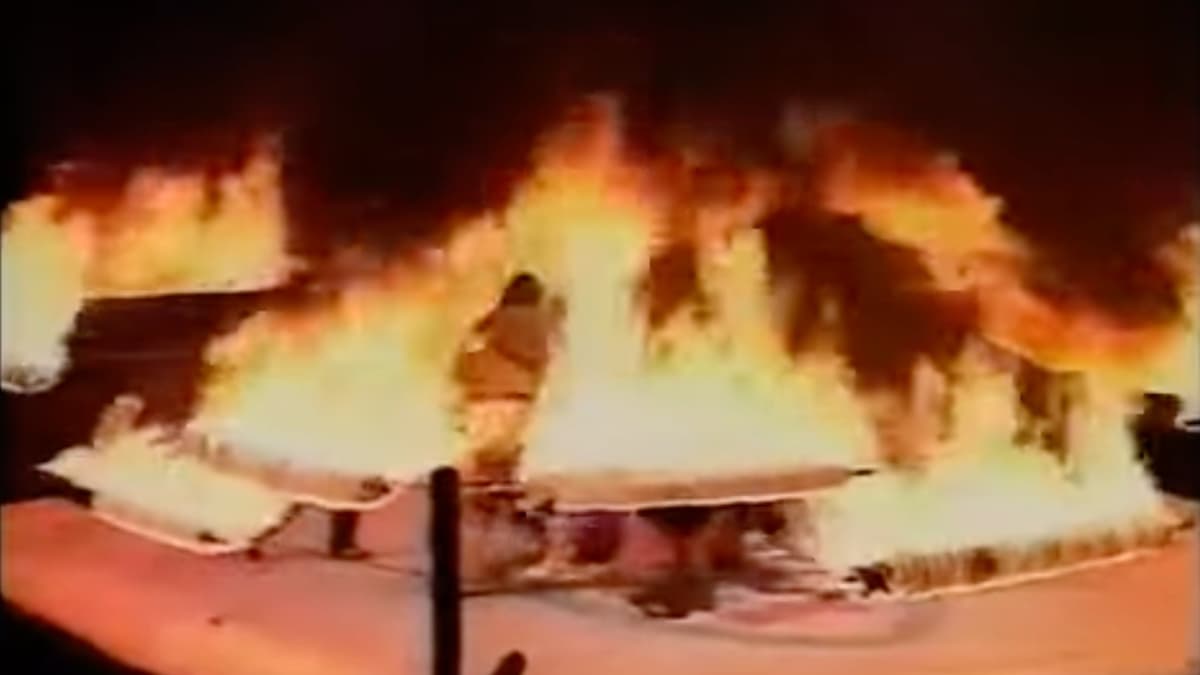
Sabu, Goto, Onita, and the referee would all quickly bail to the outside, but the ageing Sheik wasn’t so lucky, receiving third degree burns and later slipping into a coma that would nearly cost him his life. The ring itself burned to a crisp and FMW never promoted another Fire Deathmatch. The Sheik would recover, though, and would even win FMW’s main championship just one month later.
Soon after, the martial arts aspect was erased entirely, and the company dropped the ‘Frontier Martial-Arts Wrestling’ name, with FMW becoming an orphaned acronym, like WWE and KFC.
The craziness of FMW’s product was starting to take its toll on Onita, though. First, the FMW owner jumped from a bridge into a river to celebrate one of his victories, but this only resulted in Onita’s cuts becoming infected from the dirty river water and he almost died. Then in February 1993, a month after making his in-ring return from the river incident, Onita would accidentally swallow barbed wire during a match and would require emergency surgery to make sure he didn’t choke to death.
Once again, Onita recovered and returned quickly, because he had a huge match to promote on May 5, 1993.
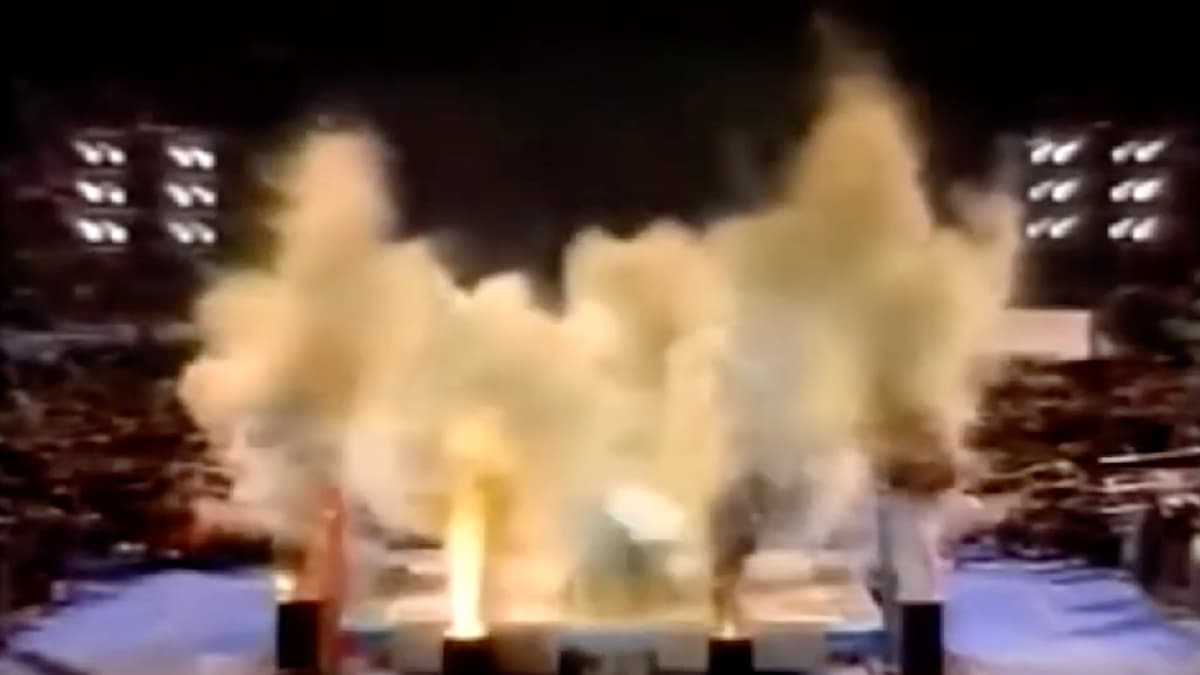
For FMW’s Fourth Anniversary Show, 41,000 spectators would pile into Kawasaki Stadium to see Onita take on his idol Terry Funk in a No Rope Exploding Barbed Wire Time Bomb Deathmatch, where the entire ring would explode at the 15-minute mark.
A gruelling bloody brawl between two people’s champions, the match would see a burned Onita get the win and leave Funk to his fate. As the timer ticked down, however, Onita would attempt to resuscitate his hero to no avail, and would end up covering Funk to shield him from the blast when the timer hit zero.
At this time, Onita was quite simply a megastar. He was on magazine covers, was a regular presence on talk shows, and he even had his own FMW video game for the Super Nintendo. With stardom came an ego, though, and with FMW having a license to print money, Onita started living super lavishly while messing about his fellow professionals on the payout front. He was also infamous as a womaniser, being one of several wrestlers to claim they have broken Wilt Chamberlain's record of sleeping with 20,000 women.
On the business front, FMW, would bring Mr. Pogo and Mitsuhiro Matsunaga back from W*ING, and would also lure W*ING Kanemura over to the promotion as FMW’s biggest deathmatch rival slowly started to crumble. But Onita was becoming even more difficult and careless, treating many members of the undercard like rubbish, whilst the presence of the Yakuza was creeping further and further into FMW.
Sections of the crowd would be reserved for Yakuza members, and wrestlers were told to leave them well alone to enjoy the show. Sabu, of course, ignored this, and dove into the front row during a match, causing a minor disturbance. Later on, Yakuza members would beat Sabu half to death before Mike Awesome saved the day, with the two having to barricade themselves in a locker room until the heat died down.
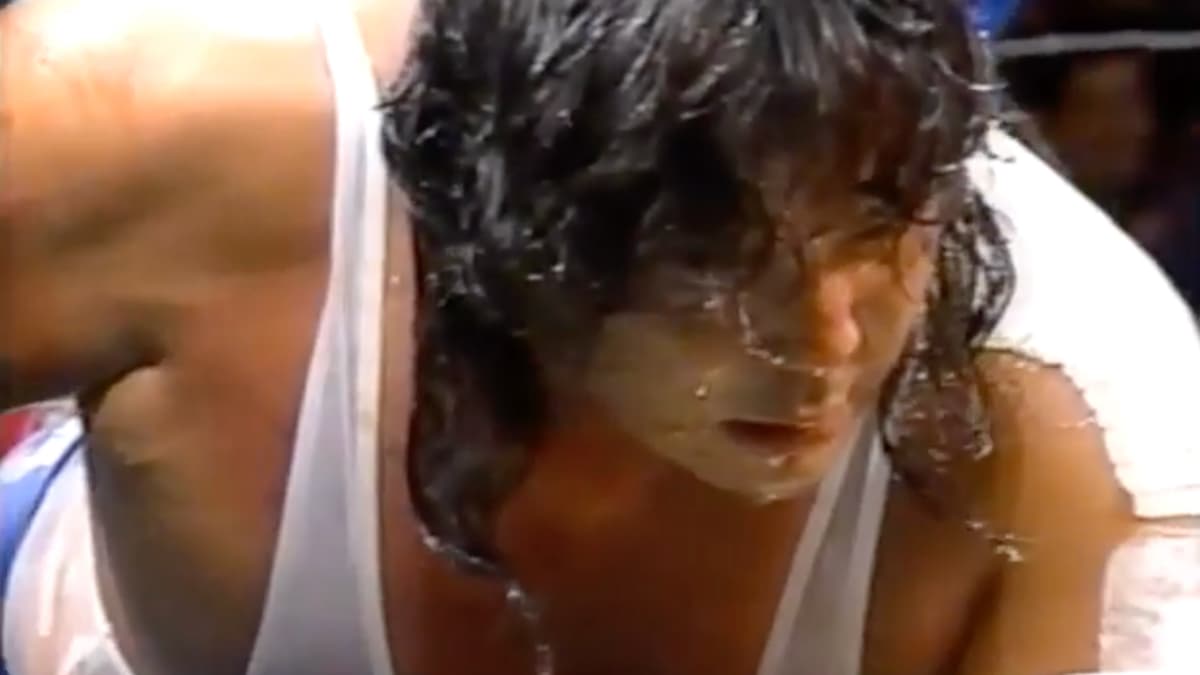
A year on from his magnum opus against Funk, Onita would face off against his former All Japan dojo mate Genichiro Tenryu at the FMW Fifth Anniversary show, with the stipulation that if Onita lost then he would retire. Lo and behold, in front of 52,000 fans in Kawasaki Stadium, Tenryu defeated Onita in a No Rope Exploding Barbed Wire Deathmatch.
True to his word Onita revealed that he would retire… in one year after a highly publicised retirement tour, with his final match set for the Sixth Anniversary Show on May 5, 1995.
In the meantime, deathmatch federation IWA Japan would form from W*ING’s ashes - later hosting the legendary King of the Deathmatch tournament - and would try to lure away one of FMW’s brightest prospects to no avail.
Throughout 1994 and 1995 it was business as usual, with Onita, Goto and Mr. Gannosuke brawling with Mike Awesome and the re-united W*ING talents in the main event scene, including a big deathmatch on a floating ring in a pool.
The wider wrestling world would start to learn of Onita’s carny ways when Terry Funk angrily shot on his protege through the media, claiming that Onita owed him $1 million from their 1993 match. Tenryu and his WAR group were also allegedly owed a ton of money.
Funk would end up signing with IWA Japan, and with stars such as Cactus Jack, Terry Gordy, and Leatherface also joining, IWA Japan was starting to position itself as a genuine competitor to FMW.
Inside FMW, turmoil was starting to spread as Onita was choosing his successor as ace of the company. First he suggested Mitsuhiro Matsunaga, but he was seen as a W*ING guy first and foremost rather than a true FMW original. Then Tarzan Goto was going to become ace, but he was reportedly unpopular with many on the roster, his drawing power wasn’t exceptional, and after Onita messed with his affairs one too many times, he’d leave for IWA Japan.
Mr. Gannosuke would also leave town, and when Mr. Pogo was asked to headline the Sixth Anniversary Show against Onita, he turned the offer down, insulted that he wasn’t asked in the first place yet also concerned that they had gone to the Onita vs. Pogo well too many times.
There was a real fear that the show could be cancelled as Onita couldn’t find a suitable opponent with mere weeks until the event. However, Onita decided to press on and announced he would take on Takashi Ishikawa in an very underwhelming choice.
At the pre-show press conference, however, a new challenger emerged to take on Onita, none other than Eiji Ezaki, the top prospect that IWA Japan had previously tried to poach. Ezaki was different from the young boy of years prior, though, and after a successful excursion to Mexico, he was reborn as ‘the phoenix’ Hayabusa.
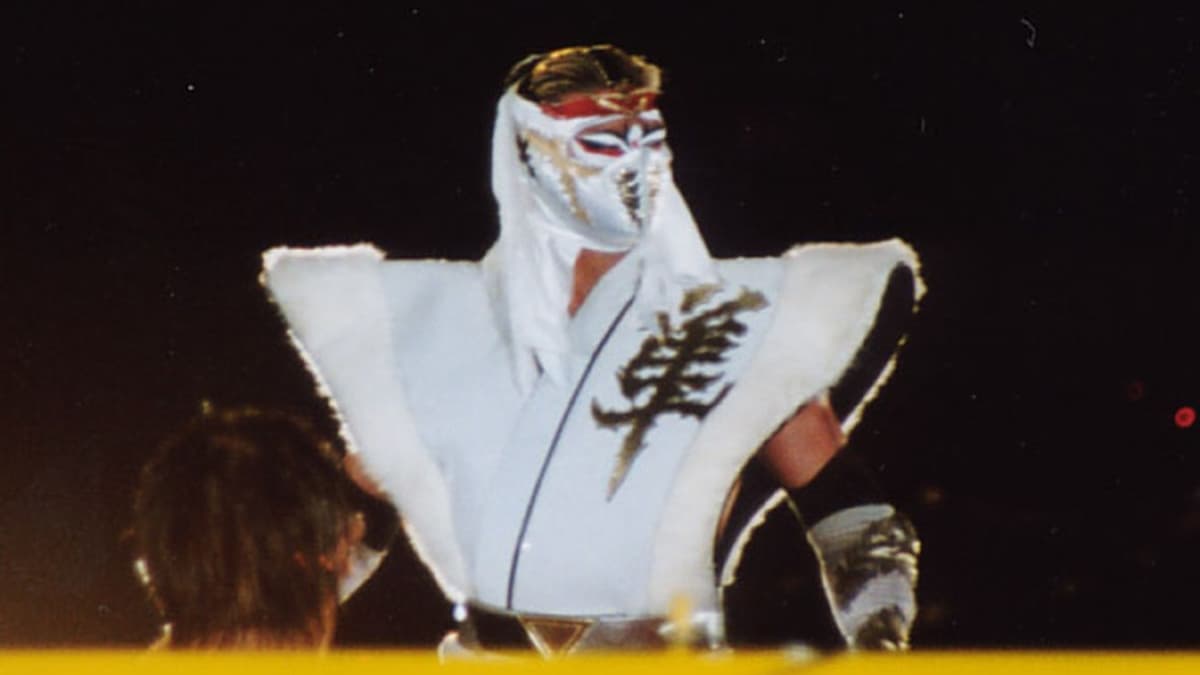
Arguably, Hayabusa was the greatest in-ring talent in FMW history. A combination of the high flying prowess of Jushin Liger and Ultimo Dragon, with the death defying recklessness of Sabu, and the never say die attitude of Onita. He was more than a mere ‘garbage’ wrestler, and it was a no brainer that he was to be the new ace of the promotion.
At the Sixth Anniversary Show on May 5, 1995, a record 58,250 fans packed Kawasaki Stadium to witness Onita’s farewell; an Exploding Cage Barbed Wire Deathmatch against Hayabusa. Although Onita won, Hayabusa took a hellacious beating and looked amazing in defeat after showing tons of fighting spirit. Onita would ride into the sunset, and Hayabusa would lead the next chapter of FMW.
With Onita gone from FMW entirely, Vice President Shoichi Arai formally took charge and rebuilt the company from the ground up.
What Onita had failed to tell anyone on the way out was that despite the multi-million dollar gates, FMW was a financial disaster. The Sixth Anniversary Show brought in over $2.5 million, but after the talent and building were paid for, there was little left over as pretty much the rest of the money went to Onita, including his $300,000 performance fee.
Onita had borrowed tons of money knowing he wouldn’t have to pay it back, and when Arai dissolved ‘FMW Inc,’ he borrowed $100,000 from Onita to establish ‘Frontier Martial-Arts Wrestling Inc.’, and even had to pay Onita $50,000 for the title belts, two buses, and other items.
In more problems, Onita was so heavily built around Atsushi Onita that the promotion struggled hugely without him. Despite Hayabusa being 10 times the wrestler Onita was, he just couldn’t connect with fans in quite the same way. Attendances dropped sharply, and whilst many would come to see Megumi Kudo wrestle, swathes would leave when her match was over, with some Hayabusa main events at this time having around 250 people watching him perform.
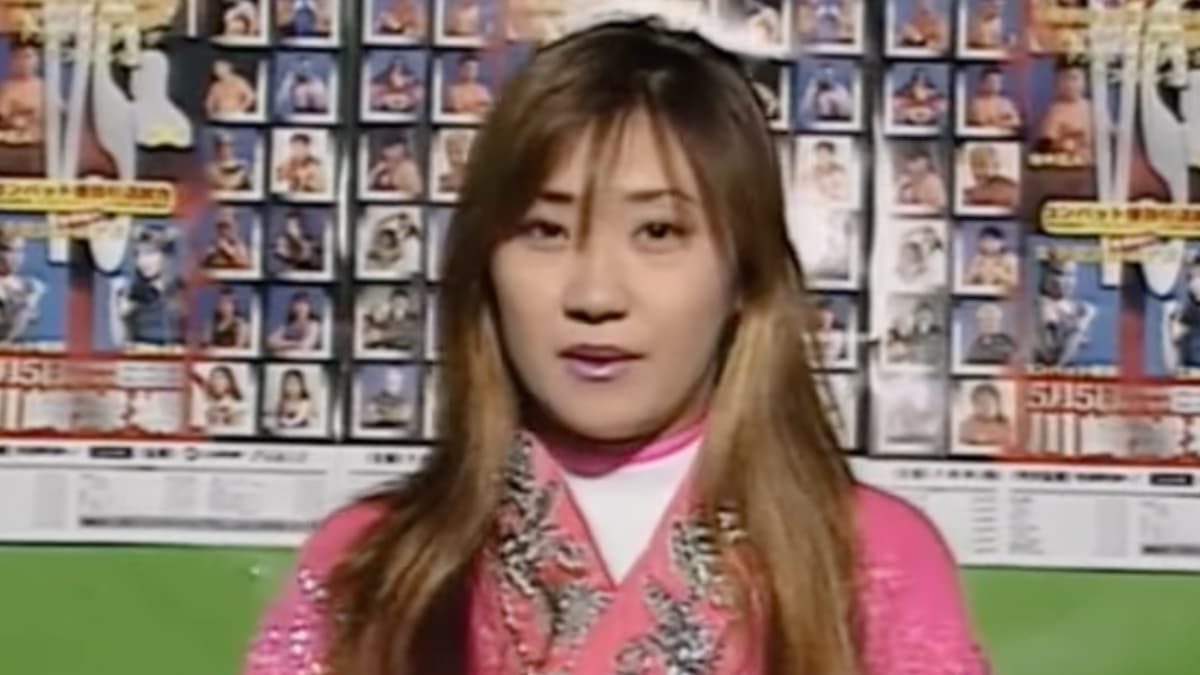
It was decided that a tonal change was needed for FMW. Barbed wire matches would be toned down and used more sparingly, whilst full-blown deathmatches were mainly reserved for Mr. Pogo and Mitsuhiro Matsunaga. The FMW style become more akin to that of ECW - still hardcore, still blood spattered, but not completely insane at all times, and somewhat safer.
IWA Japan now saw themselves as the number one deathmatch promotion and ran the fabled King of the Deathmatch tournament in Kawasaki Stadium, but they only drew around 29,000 fans, 30,000 less than what FMW did in the same stadium for the Sixth Anniversary Show. The deathmatch bubble hadn’t burst but it was deflating, and IWA would be on life support by 1996.
Slowly but surely, FMW fans came around to Hayabusa, who showed amazing fighting spirit in matches against Mike Awesome, whilst Megumi Kudo became the female Onita. Younger stars like Masato Tanaka would also start to rise up the card, and the ‘inter promotional war’ between the FMW wrestlers and the former W*ING crew would further escalate.
On May 5, 1996, over 33,000 would flock to Kawasaki Stadium to see Mr. Pogo and a returning Terry Funk defeat Masato Tanaka and Hayabusa in a No Ropes Exploding Barbed Wire Double Hell Exploding Deathmatch. Elsewhere on the card, Cactus Jack, TAKA Michinoku, and even the Rock ’n’ Roll Express would wrestle, and Megumi Kudo and a retiring Combat Toyoda would have a classic No Ropes Exploding Barbed Wire Deathmatch.
Despite this new FMW being ‘safer’, it was still a very hazardous wrestling style, and Hayabusa would start racking up injuries, with his body becoming a scarred up mess in the process. Jushin Liger would offer him a spot in New Japan, whist All Japan and WWF would also reportedly look to steal him away, but Hayabusa was loyal to FMW, perhaps to a fault.
FMW would receive another blow as Megumi Kudo announced that she too was set to retire at 1997’s 8th Anniversary Show, but there was to be some good news on the horizon.
With his acting career failing to get off the ground, Atsushi Onita returned to FMW for ‘one night only’ for Mr. Pogo’s retirement match, a wild eight-man brawl against Terry Funk and his crew in December 1996. Despite it being Pogo’s retirement match - news of which was allegedly a shock to Pogo - Onita stole the spotlight at every opportunity.
Elsewhere on the FMW card, Masato Tanaka and Mike Awesome would routinely batter each other, whilst a returning Mr. Gannosuke would enter a storied feud against long-time friend Hayabusa. Onita would also do the inevitable and return to FMW part-time in early 1997, whilst future New Japan bookers Gedo & Jado and former All Japan star Kodo Fuyuki would join FMW full-time.
Things seemed to be back on track, with FMW bringing in 50,000 to a September Kawasaki Stadium show that also featured All Japan stars such as Kenta Kobashi and the WWF’s Vader and Ken Shamrock.
Outside of FMW, Hayabusa and tag partner Jinsei Shinzaki would be booked in All Japan’s World Strongest Tag Determination League 1997, whilst a working agreement was reached with ECW.
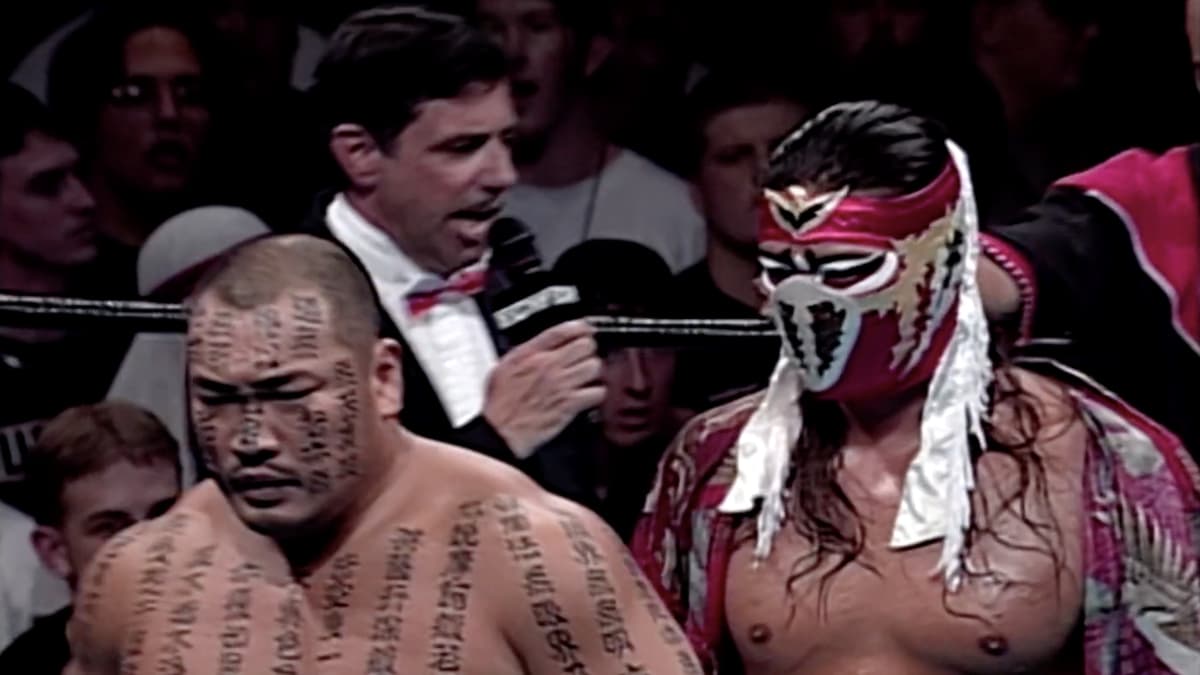
Onita would try and use his backstage influence during his second FMW run, but this would only fall on deaf ears as the former AJPW junior heavyweight was no longer in charge. Head booker Go Ito would turn Onita heel after he formed a new group called ZEN to face off against Hayabusa and Team FMW, a move that greatly angered Onita because he still had an ego and wanted to remain as the babyface man of the people.
Onita’s heel turn would not properly take off as most markets were still cheering him out of the building, but the locker room was turning against him. Kodo Fuyuki was gaining more influence backstage and wanted to steer FMW even further away from deathmatches as attendances started to decline once more, never mind that the deathmatch style was super tough on performers.
With the Monday Night Wars in the United States showing that car crash TV wrestling could draw massive numbers without anyone literally being blown up, a more ‘sports entertainment’ style was slowly implemented as FMW signed a TV deal with DirecTV, with FMW in its original form far too violent for broadcast television.
Onita kept trying to meddle with FMW’s booking, forgetting that he was no longer in charge, whilst also working to promote the first ever Exploding Ring Barbed Wire Deathmatch in America against The Sandman in ECW, a match that would ultimately never happen. Onita was also disgusted at how FMW was becoming "tame sports entertainment", and announced he was leaving the promotion for good in November 1998 to embark on a lucrative freelance run, including several iconic matches in NJPW.
However, ask anyone but Onita and they’ll say he was forced out of FMW, with the locker room and management frankly sick of his conduct of refusing to put over young talent, wanting to cling to his spot by any means necessary, and trying to meddle in backstage affairs.
With Onita gone for good, FMW strayed further down the path of ‘sports entertainment’, but it was a financial and critical disaster, with TV production costs putting a further dent in FMW’s wallet, whilst many fans turned away from the promotion.
Put simply, the new ‘FMW Entertainment Pro Wrestling’ wasn’t working. Head booker Go Ito would walk away in 1999 due to burnout, with Kodo Fuyuki taking over and introducing Vince Russo-levels of bizarreness.
For example; H - an unmasked Hayabusa - took on Mr. Gannosuke - now known as Hayabusa - in a ‘Ricky Fuji Anus Exploding Deathmatch’, where to win you had to stick a firecracker up your opponent’s bottom and light it. These two were heated generational rivals remember.
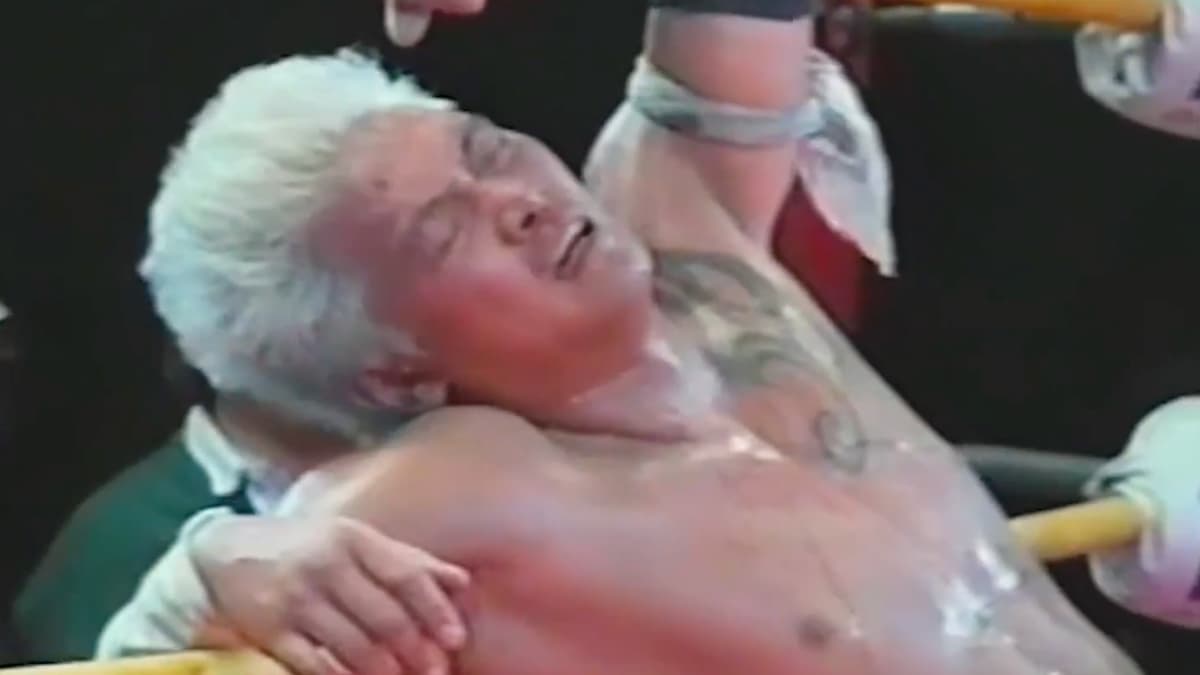
Fuyuki allegedly wanted to rename the company World Entertainment Wrestling but President Shoichi Arai shot this down, saying there was still name recognition in FMW. It was just now an FMW that would feature ghosts, curses, and giant biohazard monsters.
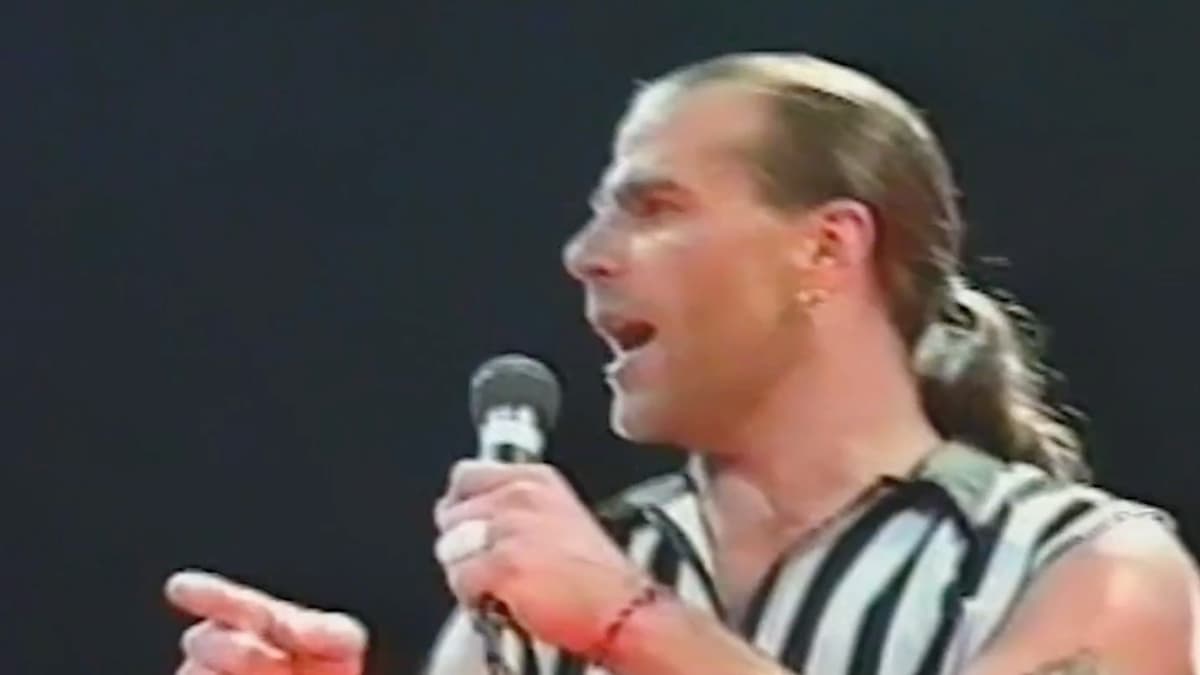
The gates at this time often struggled to pass 3,000 fans, a massive fall from grace from FMW’s peak. A renewed working relationship with ECW would help a little, as would a Shawn Michaels guest referee appearance in 1999, but the rot had truly set in.
Like Onita before him, Fuyuki pushed himself heavily and used all manner of publicity stunts to attract attention to FMW. From having ‘adult movie’ stars join the roster, to matches featuring celebrity chefs and baseball stars - alongside many other shenanigans - nothing was too dumb or crass for FMW.
FMW’s TV partner DirecTV would go out of business in 2000 with FMW subsequently finding a new home in SkyPerfecTV. However, like ECW with TNN, SkyPerfecTV just didn’t care about FMW and hardly promoted the company, nor did they adequately support them financially.
Things were worse than before. Whatever fans that were left started losing interest, exacerbated when Hayabusa had to take six months off for surgery. In yet another similarity to ECW, FMW’s money woes were so bad that Shoichi Arai couldn’t afford to pay many of his wrestlers heading into 2001. Unsurprisingly, many stars would leave, with the biggest being Masato Tanaka.
A last roll of the dice saw over 11,000 attend the 12th Anniversary Show in the former Kawasaki Stadium parking lot as Hayabusa returned, as did Genichiro Tenryu, whilst The Great Sasuke would compete in the first Exploding Cage Match since 1997, this time in an Exploding 15,000 Volt Thunderbolt Octagon Cage Bomb Deathmatch. FMW would also strengthen their working relationship with All Japan, but unfathomable disaster soon struck.
The main event of the evening saw Hayabusa take on Mammoth Sasaki in a regular singles bout. Mid-match, Hayabusa went for a lionsault, but slipped on the middle rope, didn’t complete the full backflip rotation, and spiked his head on the mat. Hayabusa cracked two verterbrae and was rendered paralysed from the neck down.
The match somehow continued until the referee realised something was very wrong as babyfaces ran into the ring, as did Arai who was on commentary. Hayabusa remained conscious and told the audience to wait for him and “not let FMW die” as he was stretchered out of the arena.
Throughout his career, Eiji Ezaki admitted that his high flying style scared him, and his character change to H was in order to leave the death defying Hayabusa style behind and rebrand as more of a mat technician. But the fans loved Hayabusa, and Ezaki re-donned the famous mask and reverted back to the style that made him a legend, all to please the hardcore FMW audience.
The wrestling world was stunned by Hayabusa’s injury, and many offered their services to help an FMW who had just lost their biggest star. Atsushi Onita also reportedly offered to return but was turned down.
Hayabusa or no Hayabusa, the company was bleeding money, and whatever fan interest was left dwindled even further after Mr. Gannosuke shattered his ankles during a match with Vic Grimes.
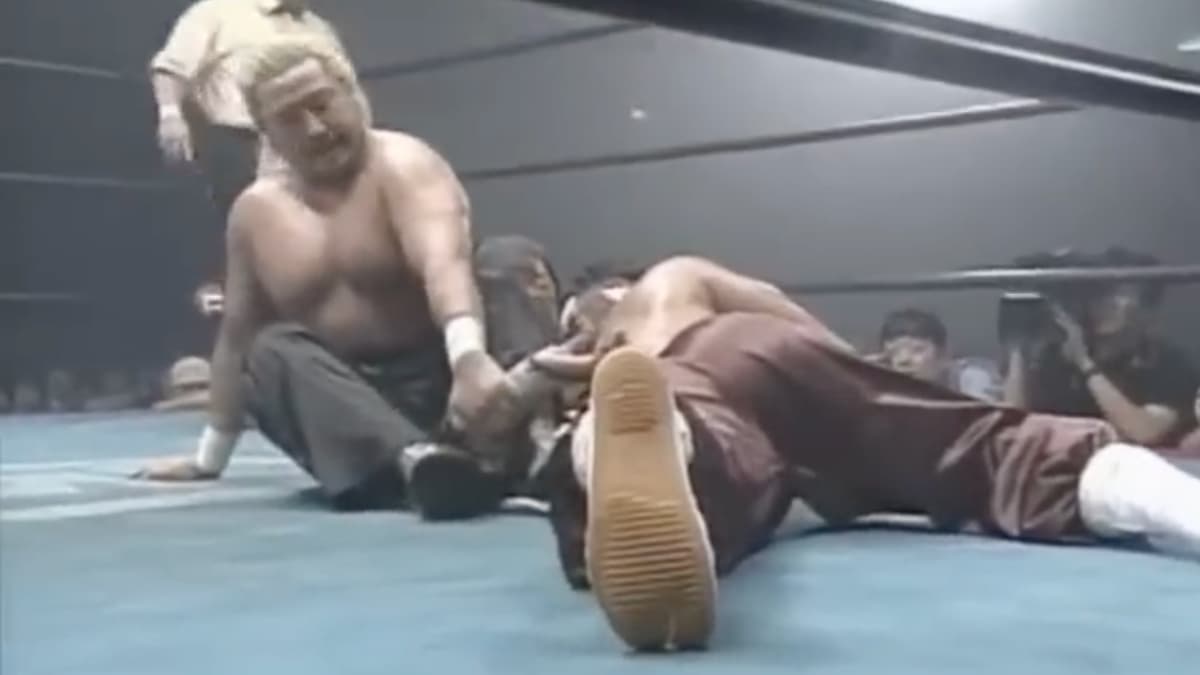
On February 14, 2002, FMW President Shoichi Arai would declare the company bankrupt and close its doors. FMW was over $3 million dollars in debt, with Arai needing to go into hiding, having personally borrowed from over 20 different Yakuza groups to keep FMW afloat. In hiding, Arai would write a book detailing the shoddiness that was the FMW business operation, with Arai putting Atsushi Onita on blast throughout.
Onita and Kodo Fuyuki would try and spin FMW’s demise and financial woes into an angle but this too was cut short as Fuyuki revealed he had cancer and would retire after a goodbye match in Pro Wrestling NOAH in April 2002. Fuyuki would pass away in March 2003.
Further tragedy struck in May 2002, when, unable to pay off FMW’s debts to the Yakuza, Shoichi Arai took his own life. Arai hoped that his life insurance payout would settle his Yakuza debts and would keep his family safe. However the payout was not enough and his family would have to pay off the remainder of the debt.
Arai’s daughter Shell would reveal years later that she holds Atsushi Onita partly responsible for her father’s death for having taking advantage of his loyalty and kind personality, lumbering him with the financially insecure FMW without revealing the true extent of its debts and burdens.
Considering the extreme violence of its content, stop/start booking, danger of its in-ring style style, financial insecurities, and periods of fan apathy, it was frankly a miracle that FMW managed to last for 12 years. The story of FMW was hardly a happy one, though, and this continued after its demise.
Hayabusa would eventually regain the use of his legs and was able to walk short distances with a cane, but he would never realise his dream of walking unaided in a wrestling ring as Eiji Ezaki would pass away in 2016 aged just 47. One year later, Mr. Pogo would pass away due to complications from surgery, aged 66.
Many of FMW’s top stars would bounce around from promotion to promotion but few would reach such heights again, whilst others like Mr. Gannosuke would eventually leave the business altogether and return to the real world.
Several splinter groups would form after FMW’s end but these were usually short lived as old grudges from the FMW days, a diluted market, and wrestling as a whole being on the downturn helped kill them off.
Without FMW, W*ING, and IWA Japan, Big Japan Pro Wrestling would reign as the king of the Japanese deathmatch scene, whilst CZW would carry the torch in the United States for several years, before the rise of GCW.
Unsurprisingly, FMW built up a huge cult following during its run, and several attempts were made over the years to revive the FMW name. Onita tried in 2002 and again in 2015 before eventually launching FMW-Explosion in 2021, allegedly after being disgusted by the botched ending of AEW’s Exploding Barbed Wire Deathmatch at Revolution 2021.
This was all after a multi-year stint in politics from 2001 until 2007 as Onita was elected to Japan’s House of Councillors. One of his first acts in office was to launch a humanitarian mission to Afghanistan in the aftermath of the United States-led invasion of the country. He would remain in office until he was forced to resign in 2007 amid a sex scandal in which it was claimed he used government accommodations to host a threesome with an adult film actress and a female employee of Japan’s Ministry of Land, Infrastructure, Transport and Tourism.
Despite being a mark for himself, a massive carny, and during his FMW run was nothing special from a technical standpoint, there is probably no better babyface underdog in the history of pro wrestling than Atsushi Onita, and he continues to influence pro wrestling to this day.
Whilst deathmatch wrestling has always been a niche in an already niche world, it is unlikely that we’ll ever see another deathmatch federation reach the heights that FMW did. Quite simply, Atsushi Onita caught lightning in a bottle and inadvertently changed the entire wrestling business forever. Without FMW there is no ECW, without ECW there is likely no Attitude Era, and wrestling as a whole would have been a whole lot more boring.