A Match So Brutal Vince McMahon Almost Stopped It: Kurt Angle Vs. Shane McMahon At WWE King of The Ring 2001
The true story of Kurt Angle vs. Shane McMahon at WWE King of the Ring 2001

May 27, 2026

The true story of Kurt Angle vs. Shane McMahon at WWE King of the Ring 2001
May 27, 2026
In WWE’s quest to astonish and thrill its audience, many a name-brand star has taken daunting risks, sometimes with unnerving and regrettable results. Vince McMahon himself found himself looking on in horror one night in 2001, however, when the wrestler enduring an ungodly amount of punishment was his own son.
One of the most important figures on WWE television in the spring of 2001 was Shane McMahon. The cavalier-minded son of Vince had famously usurped the purchase of WCW out from under his father's nose and Shane O’Mac was going to be a key figure in the launch of a WWE-occupied World Championship Wrestling.
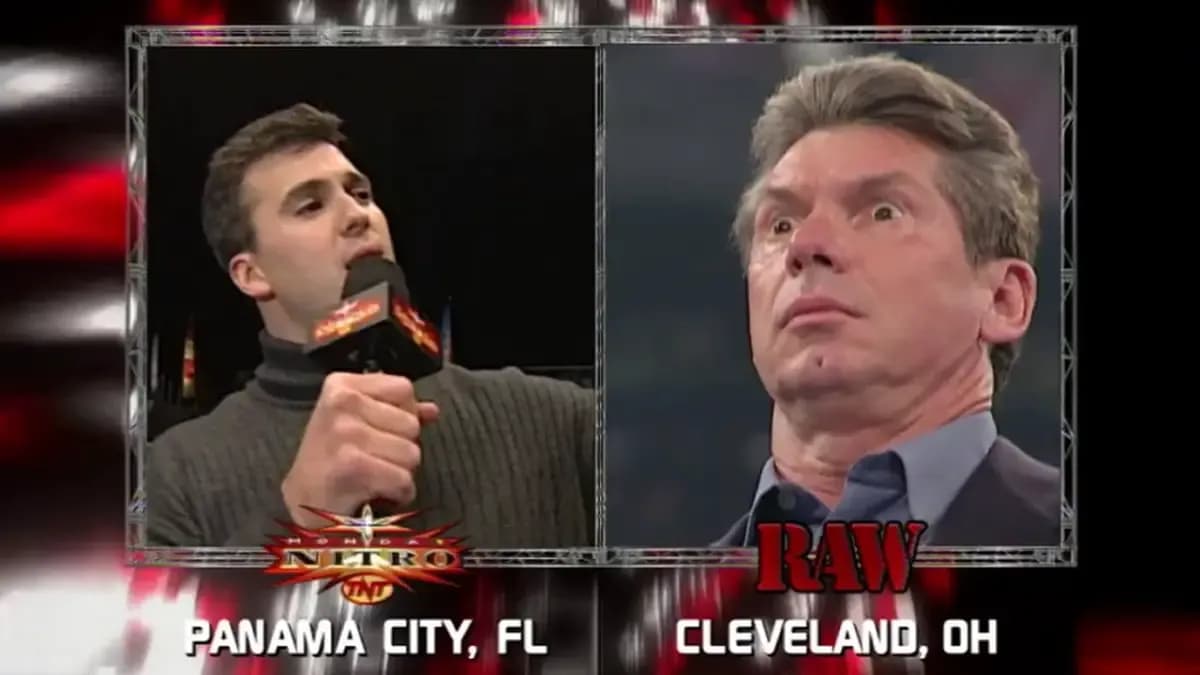
At the time of the storyline, Shane was presented as valiant babyface, having defended his mother Linda's honour during his programme with his father, Vince, which culminated in a win for Shane at WrestleMania X-Seven.
Shane went on to outwit, outmanoeuvre, and out-death defy The Big Show at Backlash the following month in a Last Man Standing Match. Although WCW had been long presented as an enemy force in WWE canon, the man leading them in storyline couldn't have looked more like a daring and gutsy superhero.
Shane McMahon may not have been the greatest wrestler in the world, but audiences truly admired him, especially in 2001. He was a fan favourite strictly for the insane risks he took, especially for a man who had enough money that he didn't need to do anything.
Somebody who wasn't a fan favourite, though, was Kurt Angle and that had more to do with his character alignment. Even though fans enjoyed watching Angle's outstanding athleticism and technical skill, the Kurt Angle character was about as uncool as he could possibly be, a dorky mama’s boy whose brashness and social naiveté proved to be a potent blend.
Angle was so gifted a performer, however, that he made an uncool character "cool", as he dispensed high amounts of comic aloofness, making himself indispensable in just about every possible facet of television wrestling. When fans booed the Olympic gold medalist, it was usually through an appreciative smile.
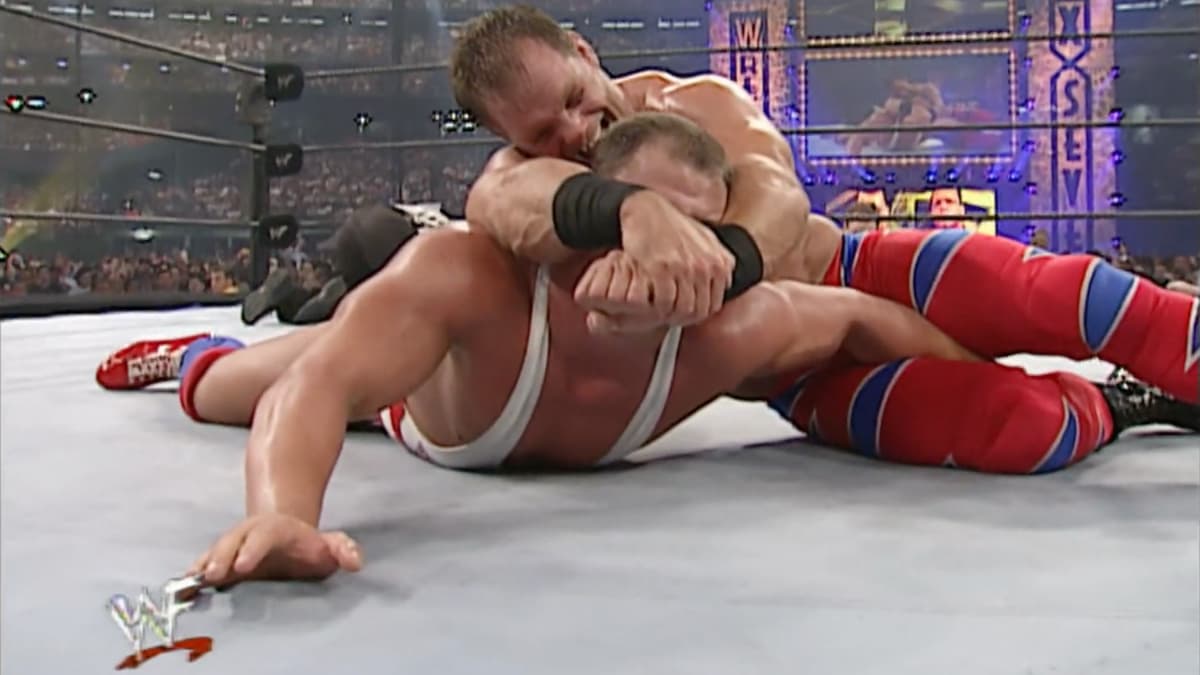
To this point, Angle's comedic brilliance tended to override his wrestling mastery, but not always. At the same WrestleMania X-Seven where Shane battled his father, Angle matched up against Chris Benoit in one of the most purely-scientific matches that the sports entertainment giant had broadcast to that point. Fans not used to seeing this much wrestling in the World Wrestling Federation applauded respectfully through their intricate mat sequences.
Angle's stark duality served him well, no matter who he worked with. Whenever WWE needed Angle to be in a given storyline, he had the ability to play that part to the fullest hilt. When Angle matched up with Shane McMahon seemingly out of the blue in 2001, some probably figured they were in for a storyline that was on the light-hearted side.
The programme began innocently and randomly enough, in true insta-feud fashion. At the 2001 Judgment Day pay-per-view, Angle reclaimed his stolen gold medals from Chris Benoit in a Two out of Three Falls Match. The following night on Raw, the self-indulgent Angle organised a formal ceremony for himself in which he essentially recreated his 1996 obtaining of the medals, only more intentionally mawkish and absurdly sentimental.
Then, for unknown reasons, Shane McMahon interrupted Angle's moment of hedonism in order to remind us all that WCW's rebirth was coming soon. The interjection of McMahon was especially out of nowhere as he hadn't been seen in the three weeks since Backlash, and he had no prior on-screen connection with Angle. To make matters worse, the crowd in San Jose booed the promise of a WCW comeback.
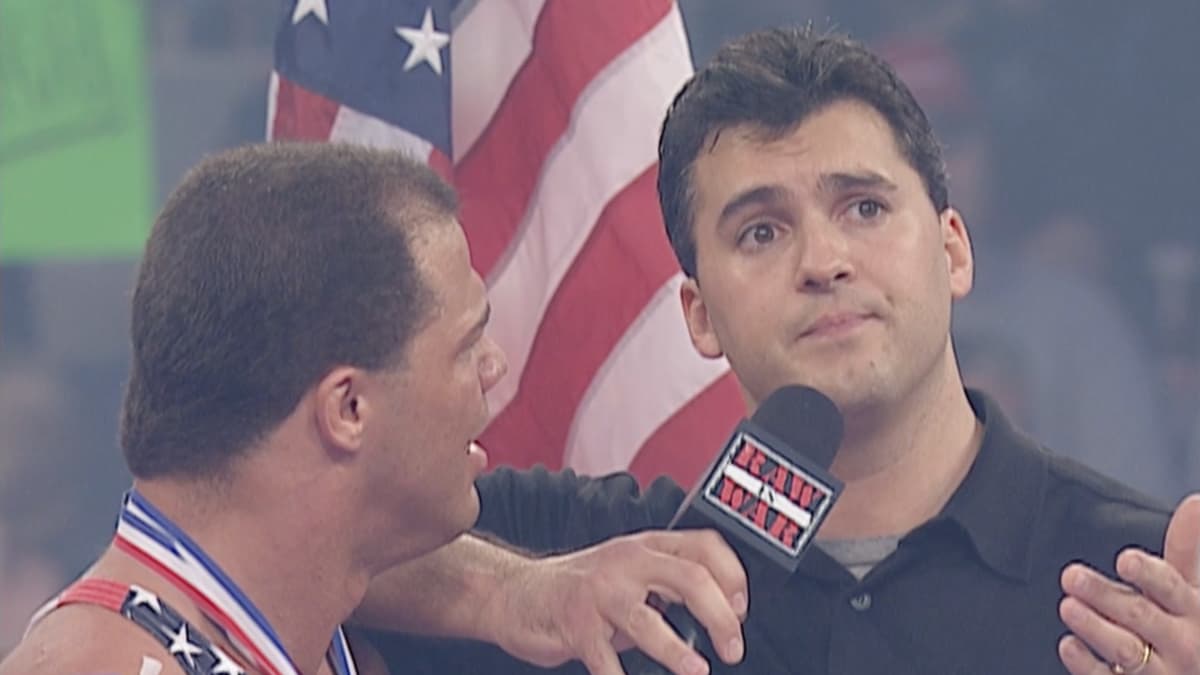
WCW aside, the real purpose of the segment was to link Angle and McMahon as enemies. This was firmly achieved by an annoyed Olympian giving McMahon the Angle Slam from the medal stand.
Angle went on to demand a match with Shane at the forthcoming King of the Ring. In deference to Shane's limited wrestling skills, the match was scheduled as a Street Fight, ensuring that mayhem was likely.
That wouldn't be Angle's only match at the pay-per-view, however. As 2000's King of the Ring, the hyper-competitive Angle had designs on becoming a two-time monarch. Thus, Angle defeated Hardcore Holly in a qualifying bout to enter the 2001 tournament, and subsequently submitted Jeff Hardy in a televised quarter-final. He joined a semi-final field that included three on-screen allies in Edge, Christian, and Rhyno.
Just like the 2000 event, there was a reasonable chance that Angle could be wrestling three times in one night. While he had done three matches in a night before, there was never an elaborate stunt show counted among them.
As Angle recalled, he and Shane met every Wednesday for four weeks preceding the King of the Ring, going over spots and working to put together what was going to be a lengthy match. Veteran wrestler Al Snow not only helped train Shane for the match, but Angle credits Snow for assembling the structure of the Street Fight.
To this point, McMahon had built his in-ring identity on high-wire stunts, including a Flying Elbow through the announce table to Test at SummerSlam 1999 and a tumble from the entrance stage at SummerSlam 2000, with both ranking amongst the most preposterous stunts ever undertaken within WWE.
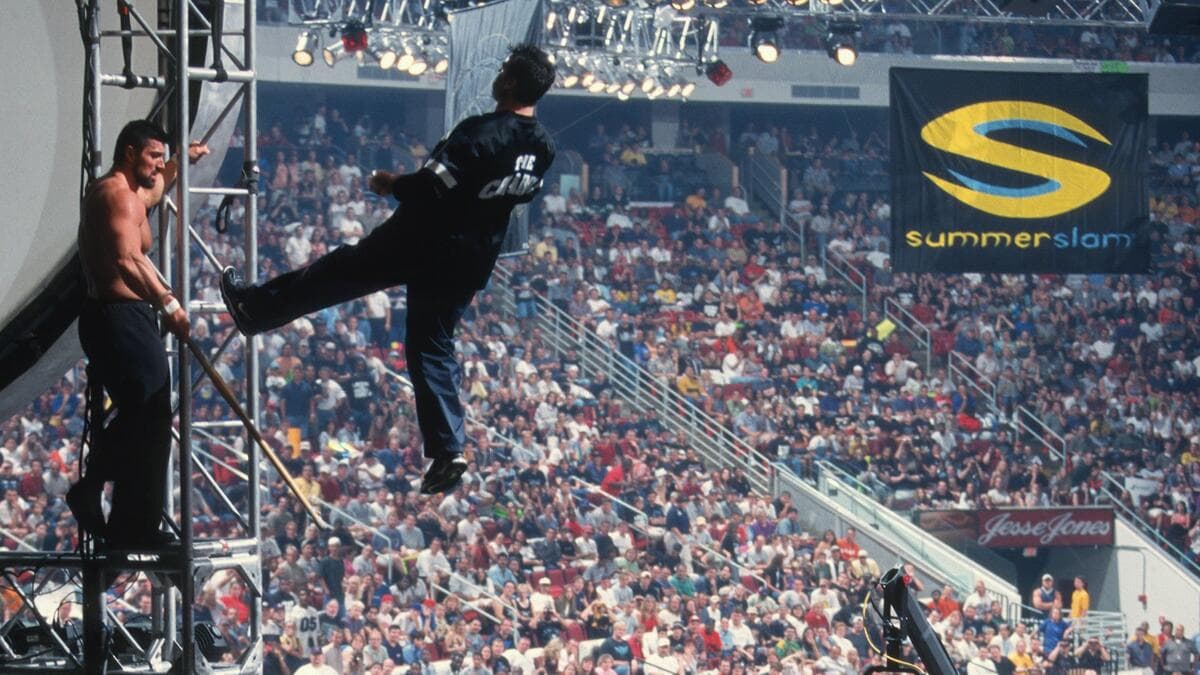
The Street Fight at the King of the Ring wouldn't include much in the way of recreational sky-diving, but it looked to be spectacular nonetheless.
The opening pay-per-view bout of King of the Ring pitted Kurt Angle against Christian in a semi-final match. It was a solid, well-worked eight-minute match that was hampered by neither man being a true babyface, meaning the crowd wasn't sure how exactly to invest their energy. The finish came when Shane ran interference, helping Angle score the win. It made perfect sense as McMahon was ensuring that Angle wrestled twice before the Street Fight.
That may have been part of the story, but Angle was also legitimately knocked loopy while performing an overhead suplex during the match with Christian and the Olympic gold medalist sustained a concussion. This being 2001, though, Angle continued to wrestle for the remainder of the pay-per-view.
A couple of nine-minute matches acted as the buffer between the opening contest and Angle's next match, the final tournament bout against an ascending Edge. Angle credited Edge for getting him through the match because he was dazed enough to where he couldn't recall the exact layout.
To make matters worse, Angle came out of the Edge match with a busted lip, the apparent result of a snug strike. Shane interfered once again, this time taking down Angle with a spear that allowed Edge to hit his Impaler DDT to win the crown, leaving Angle worn down after two matches and without the comforts of having retained the kingship.
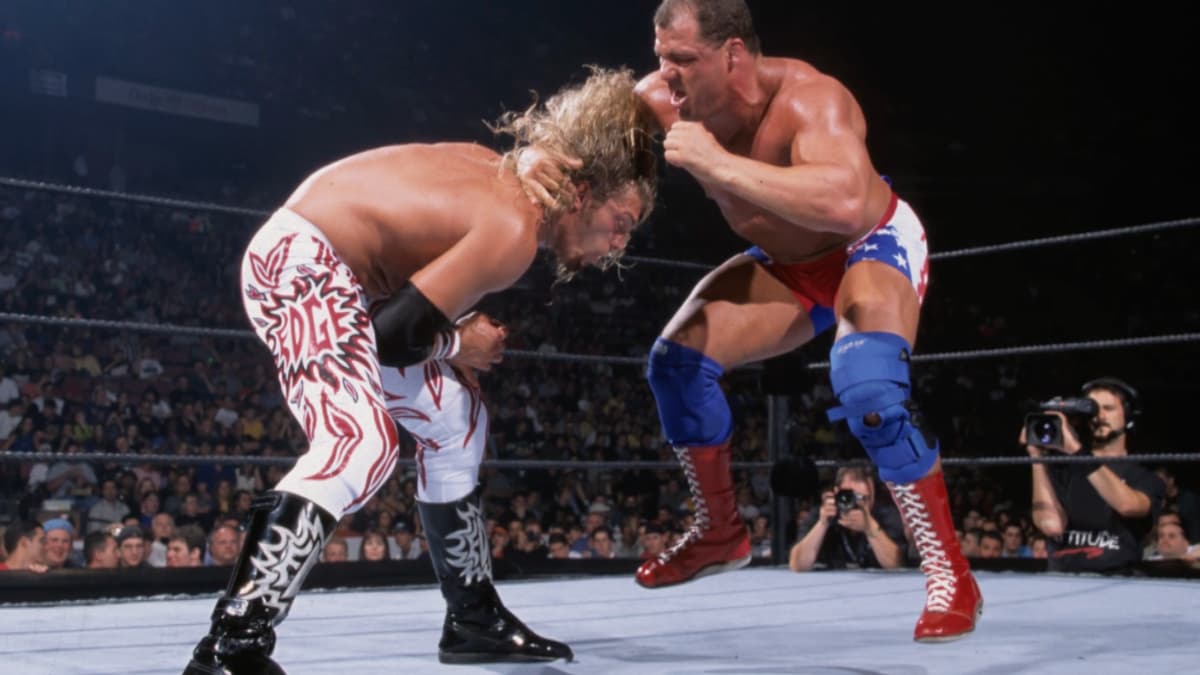
So to this point, Kurt Angle has wrestled for almost 19 minutes in total. He'd suffered at least a mild concussion, had his mouth busted open, needed some help getting through the second match due to a foggy mind, and was now tasked with carrying out a 20-plus minute spectacle full of big spots with an athletically-capable non-wrestler.
After Angle vs. Edge, a seven-minute Light Heavyweight Title match took place, as did an extensive confrontation between The Undertaker and DDP. No matter how much action filled the gaps between Angle's matches, though, he was still going into the Street Fight in far less than mint condition.
The Street Fight finally commenced, and began with some feverish wrestling sequences. Then Angle got rocked once more, this time from a Shane punch above the right eye that drew blood.
McMahon soon found out just how hard Angle can hit when the grappling god had The Boy Wonder on the canvas and began raining down with clubbing blows across the sides and back. According to Shane, he was left numb by the shots, and found it hard to catch his breath.
From there, the action alternated between weapon strikes and Shane, uncharacteristically, trying to beat the wrestling great with submission holds. There were also a few high risk spots, such as a Shooting Star Press onto a trash can from Shane O’Mac.
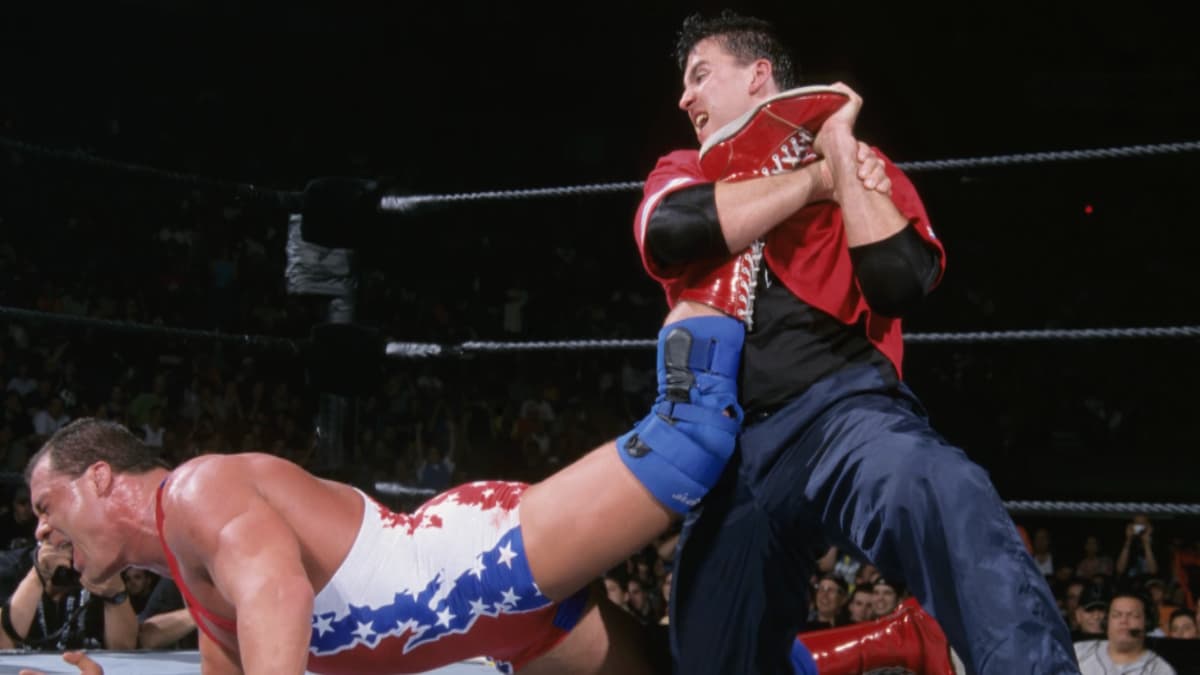
The two competitors then headed toward the aisle-way, and the match began to take a drastic turn. At one juncture, Angle attemped a routine vertical suplex in the middle of the aisle. Shane blocked and countered with one of his own, slamming Angle's lower back hard onto the unpadded floor.
Upon impact, Angle immediately struggled to breathe and remembered his hands shaking in pain. That was because he had sustained a fractured tailbone on the landing, and Shane recalled Angle barely being able to emit a sound due to the unimaginable agony he was in. Somehow, Angle was able to pull himself to his feet and continue with the contest, with the action continuing to move up the ramp.
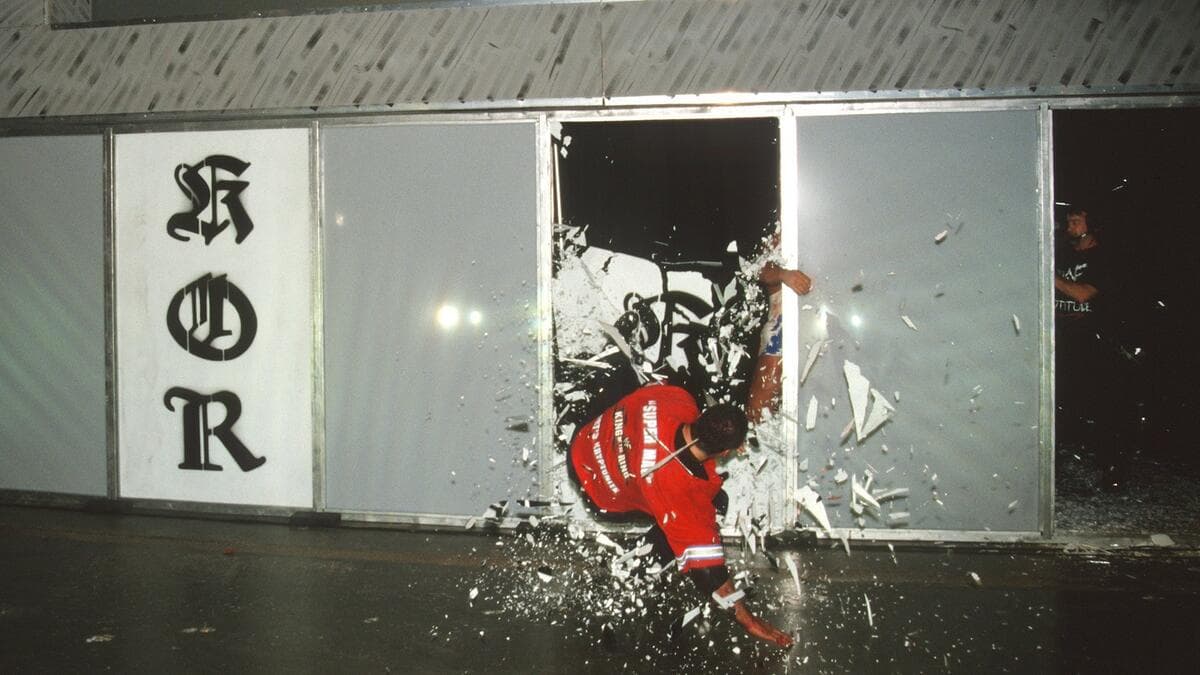
As part of the King of the Ring entrance set, there were glass panels customised with the letters “KOR" in a royal font. The objective for Angle was to suplex McMahon through the glass panels in what was set to be a brutal sequence.
Angle was under the impression that the panels were made of sugar glass, a brittle form of sugar where large quantities are pressed together to create simulated glass. Film and stage productions have used sugar glass for just what was intended here, to break away on contact and give the illusion of shattered glass, while minimising injury.
According to Angle, there was apparently a mix-up during the procurement of the props because this was no special trick glass comprising these panels. Angle has claimed this was genuine plexiglass, with a sheet of plexiglass requiring 6 to 17 times more impact to break than a normal sheet of glass, so the difference between plexiglass and intentionally-brittle sugar glass was substantial.
However, Bruce Prichard has disputed that the panels were plexiglass. He has claimed that while, yes, the wrong kind of glass was procured, the panels were not made of plexiglass, but rather a still-breakable form of glass that had been given a double coat of paint for design purposes, which unintentionally reinforced the panels. Prichard also noted that the reason sugar glass wasn't used is because the opening pyro would have been enough to shatter the fragile material.
Regardless, the poor planning and Angle’s injury caused a disaster. As planned, Kurt Angle clasped his hands around Shane's torso and went to perform his overhead belly-to-belly throw.
Angle's fractured tailbone greatly diminished his ability to swiftly throw Shane, though, and the unforgiving panel caused Shane to collide with the glass, at which point he promptly fell straight down on the top of his head, with the sickening thud of McMahon's cranium smacking the concrete floor following milliseconds later.
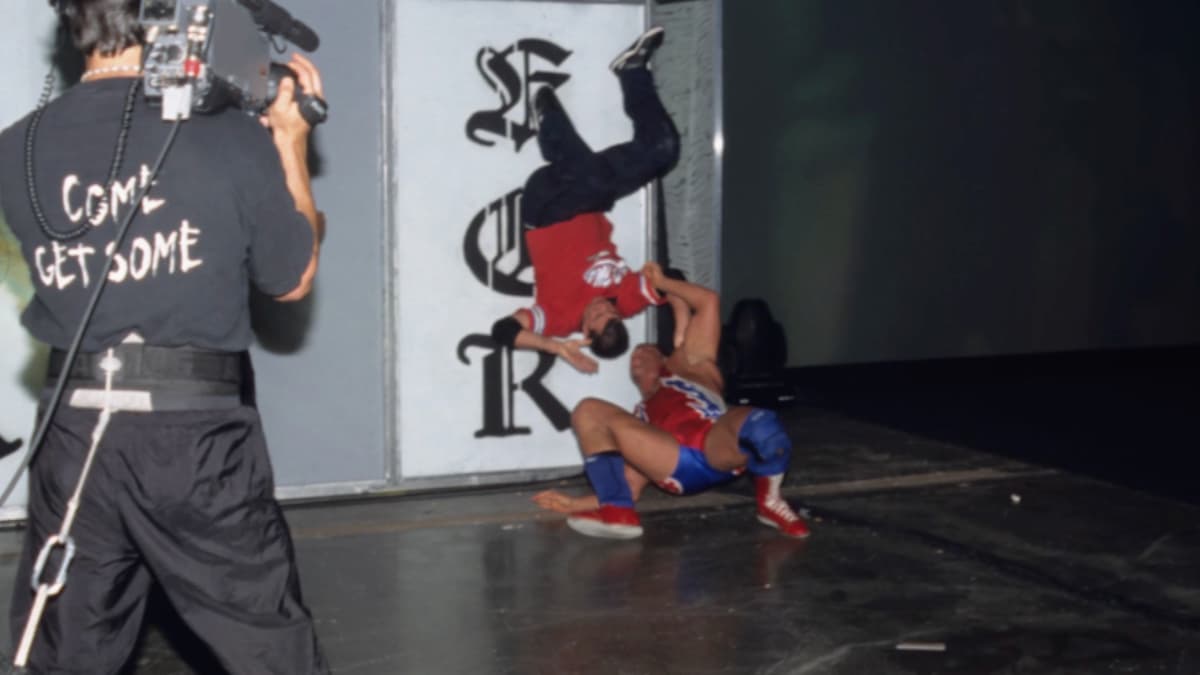
As Shane lay on the floor, a faint ringing filled his ears, as he would later recall. Referee Mike Chioda asked if he was alright, but Shane said he couldn't even hear him.
At the Gorilla position, Shane's father Vince McMahon was highly upset. According to Shane, Vince wanted to legitimately halt the match then and there, and tried ordering Chioda (through the referee's earpiece) to end it. Prichard told a slightly different version of events, claiming that he was the one on headset with Chioda, and that Vince wasn't so much trying to stop the match, but was trying to call off the planned glass sequence after the first attempt went so badly.
The orders were relayed, but the combatants continued on at the insistence of a battered Shane. Whether he was defiant, or just too loopy to know better, isn't clear.
The two wrestlers then went for a second suplex, with an injured Angle putting greater exertion into the throw. This time, the panel shattered, sending hundreds of frosty-white shards into the air as both men landed on the cold, unforgiving floor. Both McMahon and Angle bled after hitting the glass - Shane from his scalp and face, and Angle from different parts of his back and arms.
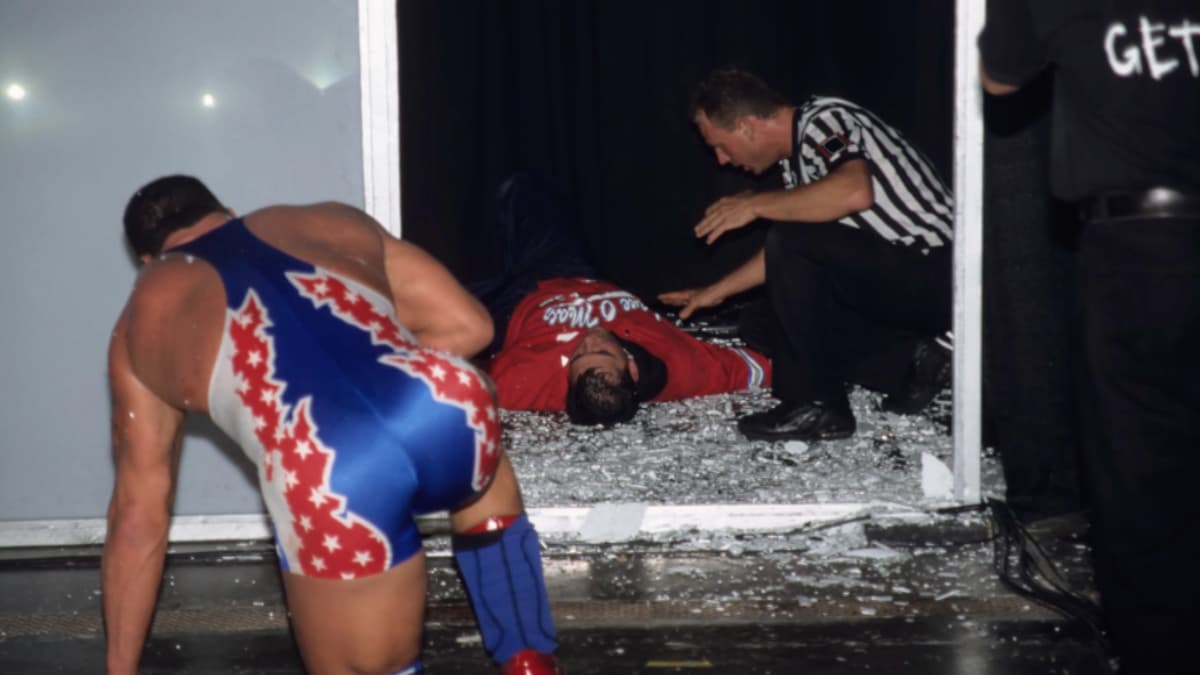
Angle believed the match was over after that, but a clearly-hurting Shane was steadfast about continuing. From behind the entrance facade, they tried the same suplex through another panel, this time going in the opposite direction. Both men were understandably exhausted by this time, and Shane didn't hit the glass with the same gusto as he once had. Fortunately, Angle anticipated the worst possible result this time, and got his hands up to better break Shane's descent, after he bounced off the glass.
A second attempt produced the same result. Determined to carry on, a fifth throw did break the glass - only instead of performing a suplex, Angle just flung Shane through the panel. Angle admitted he regretted having to do that, seeing as he was dangerously sending Shane face-first through the reinforced glass. Meanwhile, Vince was furious in the back after his orders to ditch the sequence fell on apparently deaf ears.
The match continued regardless, with Angle using a rolling equipment case to wheel what was left of Shane back toward the ring. It was time for the planned finish, one that would prove difficult under even ideal circumstances, and seemed like a daunting task for two men in otherworldly amounts of pain. Angle was scheduled to end Shane's night with a top rope Angle Slam, a move that required high amounts of strength and balance, even on simple solid ground. An avalanche version was all the more perilous.
Fortunately, there was a prop on hand to make things easier - a long, narrow piece of wood that Angle managed to use as a platform extension, bridging the ropes in the corner. While standing on the board for support, Angle hoisted Shane up for the breathtaking Angle Slam from above.
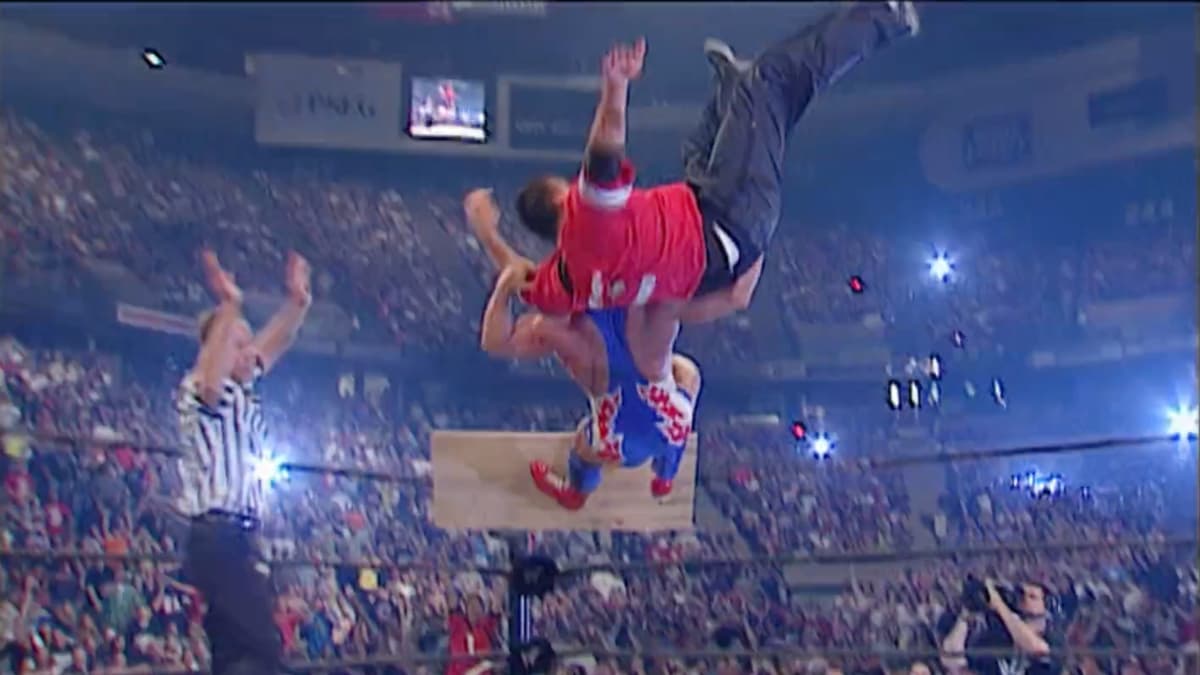
Angle could only get a fraction of his arm across McMahon on the ensuing pinfall attempt, but after 26 minutes of hell that was enough to end it all.
The match was a car wreck, though it's up to the individual to decide how to interpret that. Those praising it were enthralled by the violent spectacle, the dramatic grit on display from two men that took the fight to the edge. Others criticised how out of hand things had gotten, while fearing what might be done next in a can-you-top-this business.
Then there were critics who could see it both ways. Dave Meltzer of the Wrestling Observer Newsletter gave the match a four-star rating, while lamenting the match's dangerous structure, especially when the planned spots began to go horribly awry.
Angle and Shane both were briefly hospitalised that night to make sure they were okay. Angle missed a few bookings over the following week and didn't wrestle again until the July 9 episode of Raw, 15 nights later.
They were actually lucky compared to some of the other stars on the card. Steve Austin went on to miss three weeks of action after breaking his hand during the main event, when an intruding Booker T dropped him on the commentary table. Chris Benoit, one of Austin's opponents, had been working through a serious neck injury for close to a month, and was written out after the pay-per-view to have fusion surgery. He'd go on to miss over a year of action.
All of this on top of Triple H tearing his quadriceps the previous month, and The Rock not returning from his Hollywood excursion until the end of July left the WWE main event tier becoming very thin. The last thing they needed was for Kurt Angle - and even a part-time attraction like Shane McMahon - to end up on injured reserve as well.
Today, the match has a mixed legacy. It's inarguably one of the most brutal showings in WWE history, and how someone feels about that is unique to their point of view. It's held in high esteem as hard-to-top Attitude Era-style drama, just as it exists as a cautionary tale of how things can go very wrong in a match dependent on the cooperation of environmental hazards, as well as why referee discretion is an important thing.
There is consensus on one point. The Kurt Angle vs. Shane McMahon Street Fight from the 2001 King of the Ring is an entirely unique bout.