A Failed Experiment: The Ultimate Warrior As WWE's Successor To Hulk Hogan
Why The Ultimate Warrior's WWE Title reign was a failure

Jun 5, 2026

Why The Ultimate Warrior's WWE Title reign was a failure
Jun 5, 2026
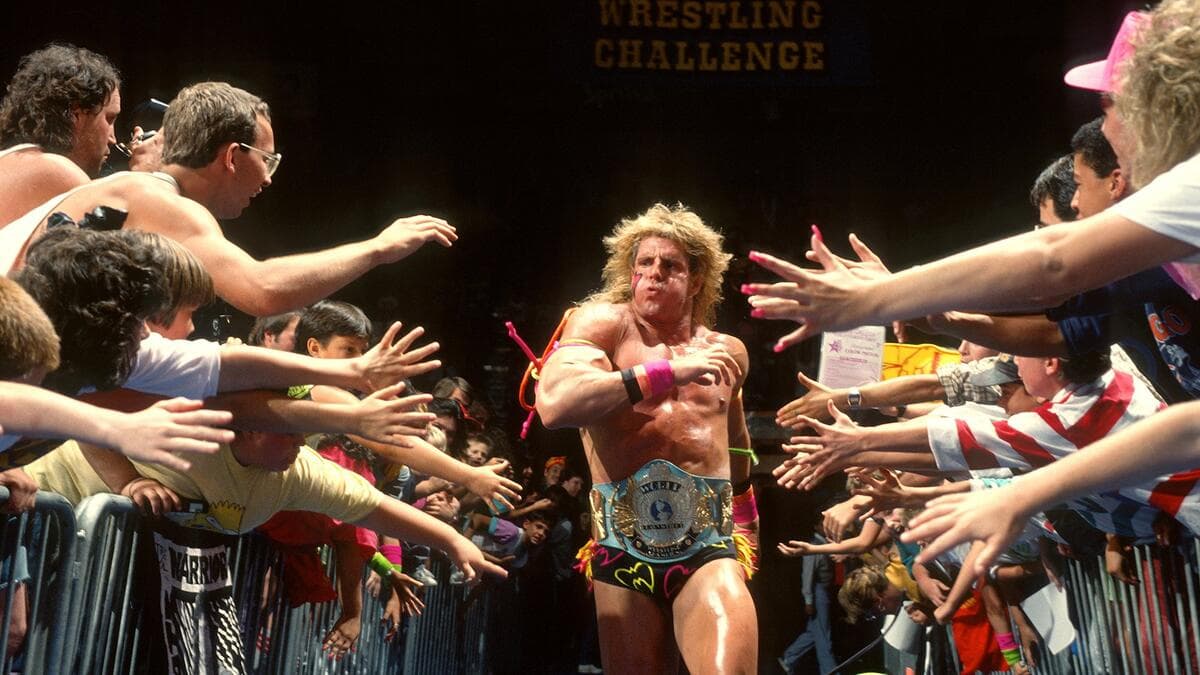
Years on from his passing, The Ultimate Warrior remains one of the most polarising stars in professional wrestling history. Today, fans either appreciate what the Ultimate Warrior character represented or they despise who Warrior the person was.
In his extensive retirement years, supporters remembered the good times, while critics loathed that somebody of his skill level received such a golden push. In his heyday, though, fans either couldn't get enough of the rope-shaking, phrase-turning, huffing-and-snarling exploits of their face-painted anti-hero, or they ridiculed Warrior for precisely those reasons. What even a staunch hater cannot deny, however, is that Warrior did have a large fan following, and he was a major star in professional wrestling.
At the turn of the 1990s, The Ultimate Warrior became the top champion of the top wrestling organisation on the planet, and seemed to have enough arena cheers and merchandise metrics to back up that push. Once his time at the top came to an end, The Ultimate Warrior spent the rest of his in-ring career looking to recapture that lightning in a bottle, to no avail.
Like many wrestlers of his day, the man formerly known as James Brian Hellwig found a gateway into professional wrestling through an adjacent sport, in his case, bodybuilding. In the early to mid-1980s, Hellwig placed prominently in collegiate and other amateur bodybuilding competitions, even winning the crown of Mr Georgia in 1984.
His pursuits in the sport led Hellwig to California, where in 1985 he became friends with a group of bodybuilders that were entering the professional wrestling business. Though wrestling had not previously been on Hellwig's radar, he jumped at the opportunity. With these other men, Hellwig received training from veteran wrestler Red Bastien and young California-based talent agent Rick Bassman.
This group of musclebound wrestling prospects was known as Powerteam USA, though Hellwig and one of the other members would be the only ones that would put a dent in the wrestling business. In November of 1985, Hellwig wrestled his first match, a tag team bout with his fellow Powerteam member. Known collectively as The Freedom Fighters, Hellwig took on the name Justice, while partner Steve Borden wrestled as Flash.
The first stop for the Freedom Fighters was Memphis' Continental Wrestling Association and, by most accounts, Flash and Justice were completely out of their league as a couple of talentless jocks heavy on muscle and low on actual skill. Fans in Memphis were initially cool to the lumbering duo, so Flash and Justice were turned heel before leaving the territory shortly thereafter.
Their next stop was Bill Watts' Mid-South territory where The Freedom Fighters became The Blade Runners, the latest in a sizeable line of Road Warrior ripoffs trying to cash in on the mayhem and dystopia that Animal and Hawk were successfully cultivating. This time, Hellwig changed his stage name to Rock, while Borden settled upon the handle that would take him to superstardom as Sting.
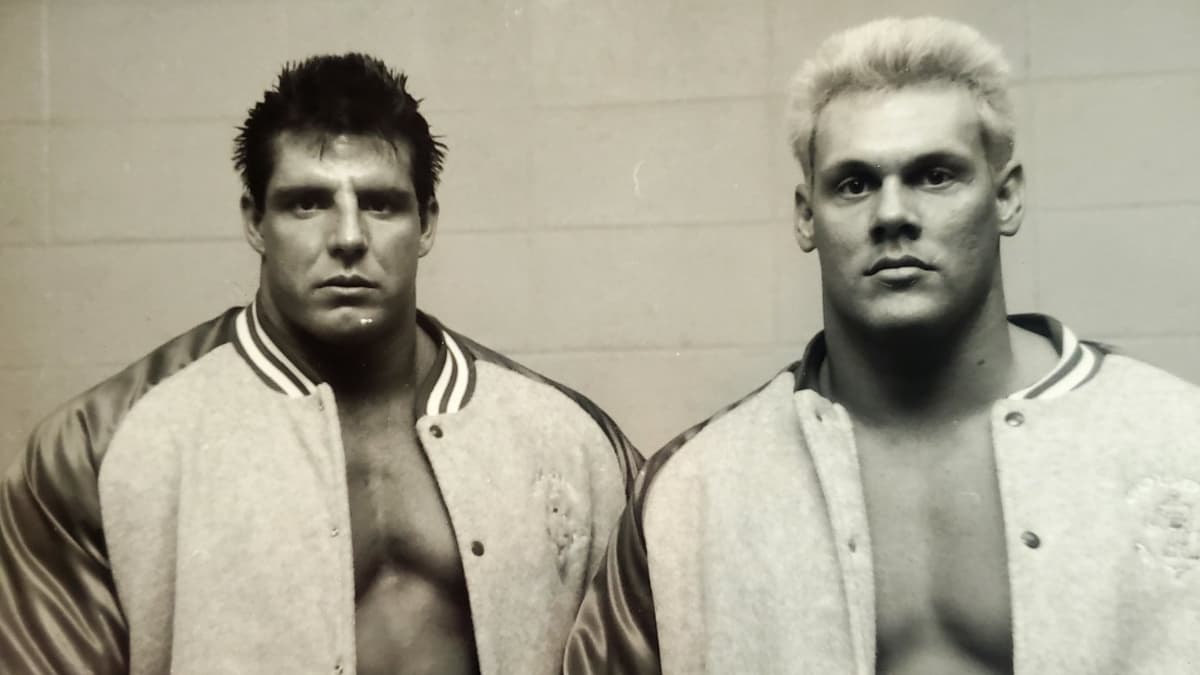
The Blade Runners disbanded in the middle of 1986 when Jim Hellwig left the territory. While Sting was well-regarded by his peers and had demonstrated an increased aptitude for wrestling, Hellwig was hampered by a reported negative reputation and just wasn't grasping wrestling like Sting was.
Shortly after departing Mid-South, Hellwig crossed over into the Von Erichs’ World Class Championship Wrestling in Dallas, where he would use his third gimmick in less than seven months. This time, Hellwig became The Dingo Warrior, an explosive force in tribal war paint that few opponents could capably contain.
Managed by Gary Hart and later Percival Pringle (AKA Paul Bearer), the Warrior was first categorised as a heel, though a face turn was inevitable. While he was still unpolished, Warrior had developed just enough stage presence so that audiences were charmed by his combustible madness. Even as a heel in Dallas, the Warrior had his fans, and he soon turned babyface, going on to win the Texas Heavyweight Title in early 1987. He wouldn’t hold onto the belt for long, though, as the World Wrestling Federation came calling.
Still using the Dingo Warrior handle, Jim Hellwig entered the WWF in June of 1987. The WWF office knew they were in a curious spot with Warrior as he had the look and presence of a star but was still clumsy and imperfect inside the squared circle. As was the case with the chiseled and athletic Tom Magee, the WWF were content to let Warrior work the house show circuit, honing his craft, before giving him anything resembling a push on television.
While that was the plan, fans at the arena shows forced McMahon's hand as the response for Warrior was enormous, far greater than expectations. The WWF wanted to ride the momentum, so the company put Warrior on television earlier than planned and he started working TV tapings in the autumn of 1987. By this time, the "Dingo" was scrubbed from his name and Hellwig was henceforth known as The Ultimate Warrior.
Jim Hellwig on TV received the consummate early push as he squashed enhancement talents in matches that rarely went over two minutes. This was perfect for The Ultimate Warrior, though, and he was arguably perfect for such a match formula that would air on a Saturday morning where he would arrive, shake the ropes, beat his chest, race around the ring in an aggressive stupor, and then cut down his opponent with a slew of strikes and slams. Warrior would then finish his hapless foe with a Gorilla press slam followed by a running splash for the win.
It wasn't just the particular match presentation that made Warrior stand out. He also turned more than a few heads with his style of promo. As if entering a trance, Warrior would rant and rave about gods and demons, the trials of humanity, the challenges of the warrior code, and all other forms of psychobabble, all the while tossing in high-volume non-sequiturs in a death metal growl.
Between those definitive squash wins and the insane rants, not to mention a hard-driving theme song that got your blood pumping, The Ultimate Warrior found himself becoming pro wrestling's next big superstar. He was a face-painted blur, a hearty dose of technicolor chaos that brought exciting distortion to an already colourful program, and fans were clamouring for more of The Ultimate Warrior.
By early 1988, Warrior began feuding with the Heenan Family, facing Harley Race and Hercules on TV and at house shows, with Warrior winning his first pay-per-view match against Hercules at WrestleMania IV. Warrior even faced Heenan, winning matches that forced the loser to don a weasel suit.
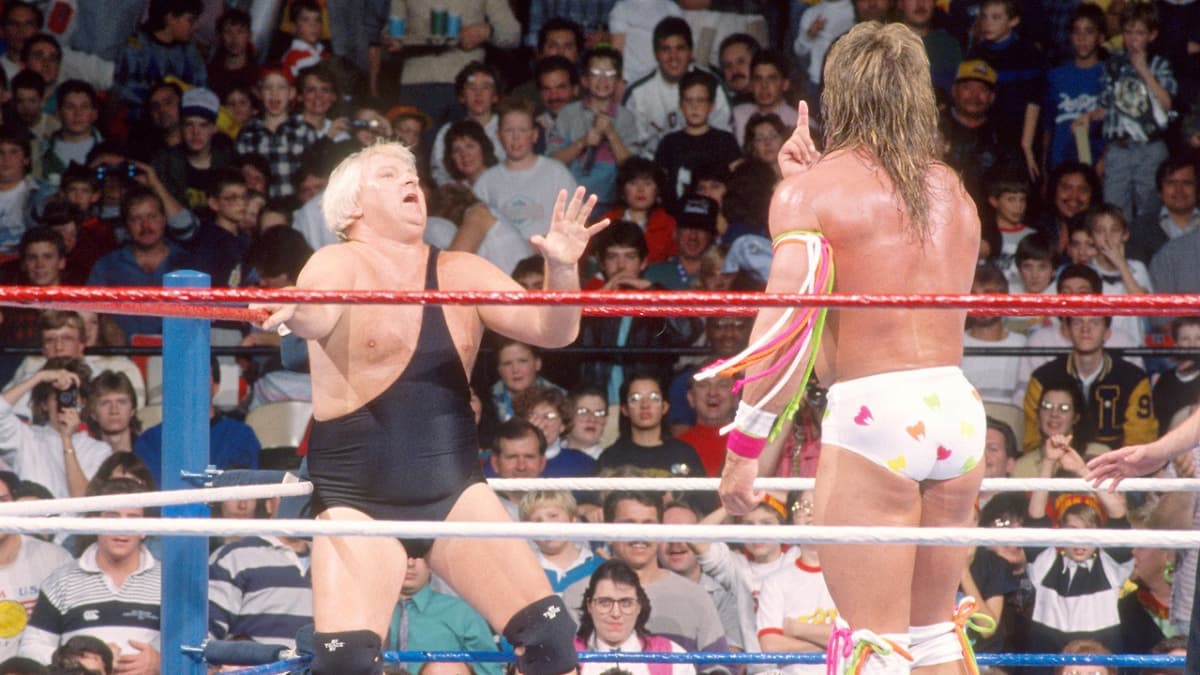
By the summer of 1988, Vince McMahon had decided that Warrior was going to be the heir apparent to Hulk Hogan. Though not presently the WWF Champion, Hogan would reclaim that crown at WrestleMania IV from Randy Savage and reassume his duties as the face of the WWF. That face was bound to develop cracks over time, though, and 35-year-old Hogan was already eyeing opportunities away from the ring. It was only a matter of time before McMahon would have to have the new Hogan ready to go.
Just after his 29th birthday, The Ultimate Warrior won his first championship in the World Wrestling Federation. Plans for SummerSlam 1988 called for then-longest reigning WWF Intercontinental Champion The Honky Tonk Man to defend the belt against Brutus Beefcake, but that match had to be scrapped during SummerSlam weekend when Beefcake was attacked by Ron Bass on WWF Superstars.
It was explained at SummerSlam that Beefcake would not be able to wrestle because of the attack, leaving The Honky Tonk Man without an opponent. The champion still made his entrance that night inside Madison Square Garden, joined by manager Jimmy Hart. The pair were all smiles when Honky gleefully demanded an opponent, any opponent, saying he didn't care who it was.
Seconds later, The Ultimate Warrior's music thundered throughout Madison Square Garden. As the cheers grew in volume, Warrior flew down the aisle in a feverish sprint. Honky didn't even have time to get out of his jumpsuit as Warrior mauled him without a second thought. Inside of 30 seconds, Warrior did what all other babyface heroes had failed to do since June of 1987 and beat The Honky Tonk Man to win the WWF Intercontinental Title.
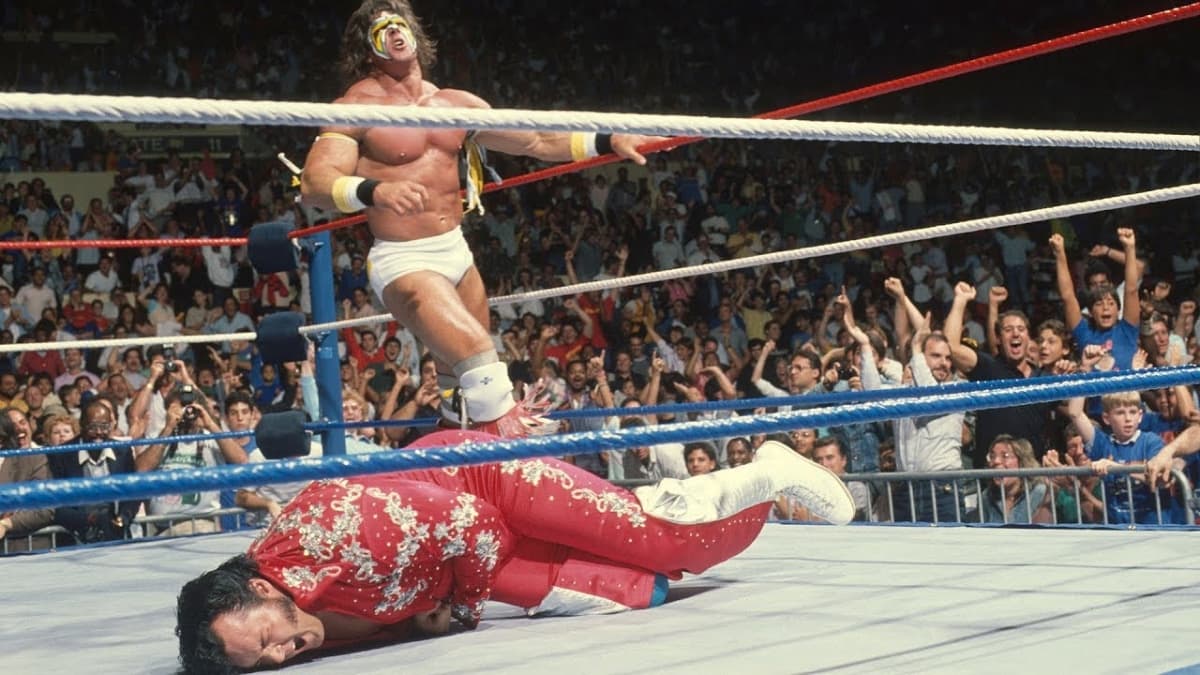
Winning the Intercontinental Title seemed to confirm what everybody had already figured out - that the Ultimate Warrior was a phenomenon, an unrestrained force of nature with room to continue his galaxial ascent.
That ascent indeed continued as he fended off The Honky Tonk Man in rematches before, at Survivor Series 1988, he was his team’s sole survivor, overcoming Ron Bass and Greg Valentine. More Warrior merchandise was released too, only showcasing Jim Hellwig’s immense popularity.
The Ultimate Warrior’s in-ring work still failed to match that popularity, though, so 1989 was spent trying to improve Warrior inside the squared circle. Following Randy Savage’s heel turn in early 1989, Warrior was programmed against Macho Man in Champion vs. Champion matches at WWF house shows. On TV, meanwhile, Warrior transitioned to a programme with Rick Rude which began at the 1989 Royal Rumble when they brawled during a posing contest. This led to Rude vs. Warrior at WrestleMania V in Jim Hellwig’s best match to date, which also ended in an upset when Rude’s manager Bobby Heenan tripped the champion on a suplex into the ring before he held Warrior’s foot down, allowing Rude to win with the misbegotten pinfall.
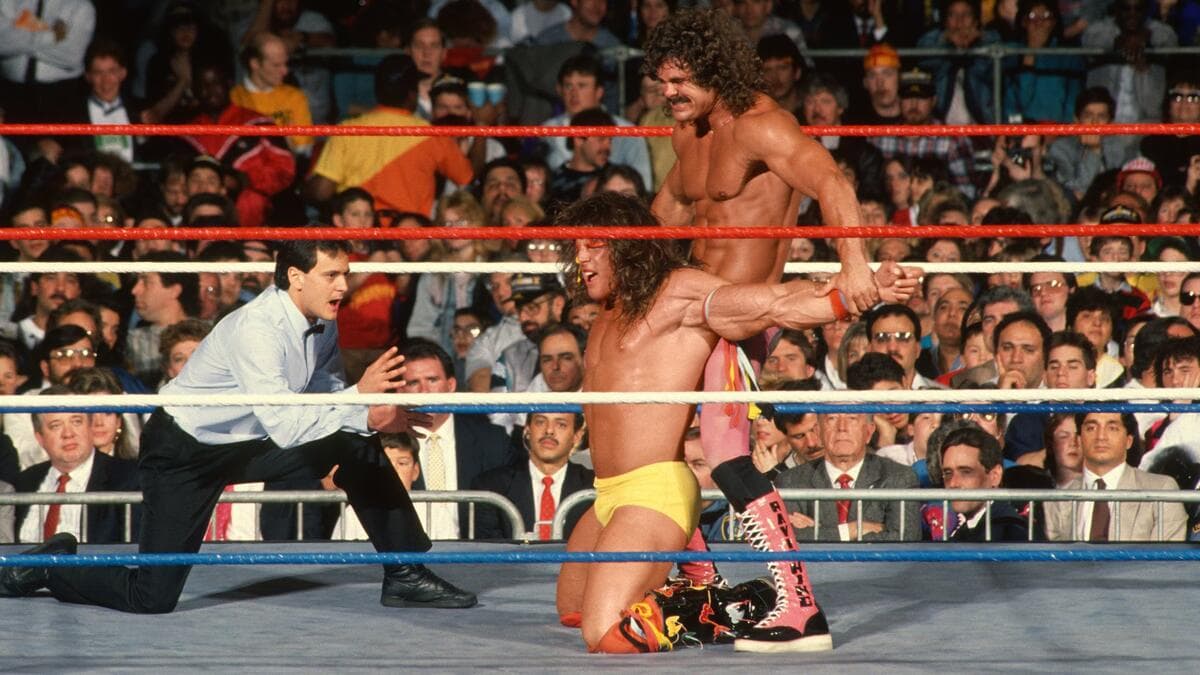
The loss to Rick Rude was just an excuse for Warrior to continue working with him. Throughout the summer months, Warrior chased Rude on the house show loops, before finally regaining the Intercontinental Championship at 1989’s SummerSlam in an even better encounter than their WrestleMania match.
The next step towards making The Ultimate Warrior a top star was to have him slam Andre the Giant. Though Andre was greatly deteriorated by the end of the 1980s, he still donned the singlet and boots for very short matches and, after Warrior vanquished Rick Rude, Bobby Heenan dispatched Andre to bring the Intercontinental Title back to the Heenan Family.
In theory, this was Warrior's biggest test to date, trying to slay a giant that only Hulk Hogan (in WWF canon) had ever felled before. What followed was a series of house show matches that Andre insisted on losing very quickly, primarily due to a personal distaste for Warrior, whom he felt didn't appreciate the push he was given, with Andre the Giant often losing in under 30 seconds to The Ultimate Warrior at live events. At some of these shows, Andre surrendered himself to being bodyslammed by Warrior, revealing that the Intercontinental Champion was just as powerful as WWF Champion Hulk Hogan.
At the 1989 Survivor Series, the match pitting Warrior and Andre's teams against each other went on last in what some felt was a glimpse at how a pay-per-view would look ending with Warrior's music instead of Hogan’s. At the turn of the decade, WWF’s transition from Hulk Hogan to The Ultimate Warrior began in earnest.
The 1990 Royal Rumble match featured one of the seminal scenes of its time as #21 entrant The Ultimate Warrior and #25 entrant Hulk Hogan cleaned house, sending all the relative fodder out of the ring. Then, after the last of the opposition had been cleared out, the WWF and Intercontinental champions both realised they were the only two men standing in the ring.
The crowd at the Orlando Arena began buzzing. This was the first time they, or anybody else, had seen Warrior and Hogan occupy the same space. For the two beloved heavyweights, the gravity wasn't lost on them either. What followed was a very brief skirmish that resulted in a double down, but this was just a tease of things to come.
It was soon announced that Hulk Hogan vs. The Ultimate Warrior would be the main event of WrestleMania VI in front of a crowd of over 60,000 fans at the new Toronto SkyDome, with what would be billed as The Ultimate Challenge being for both the WWF Championship and Intercontinental Title.
The plan was for The Ultimate Warrior to hand Hogan his first clean pinfall loss in nine years and become the new face of the World Wrestling Federation in the process. With Pat Patterson acting as the architect, Hogan and Warrior pieced together a 20-plus minute epic that would serve as the standard for future main events of its type. The fans in Toronto were anticipating an era-defining battle, and the WWF was going to give them one.
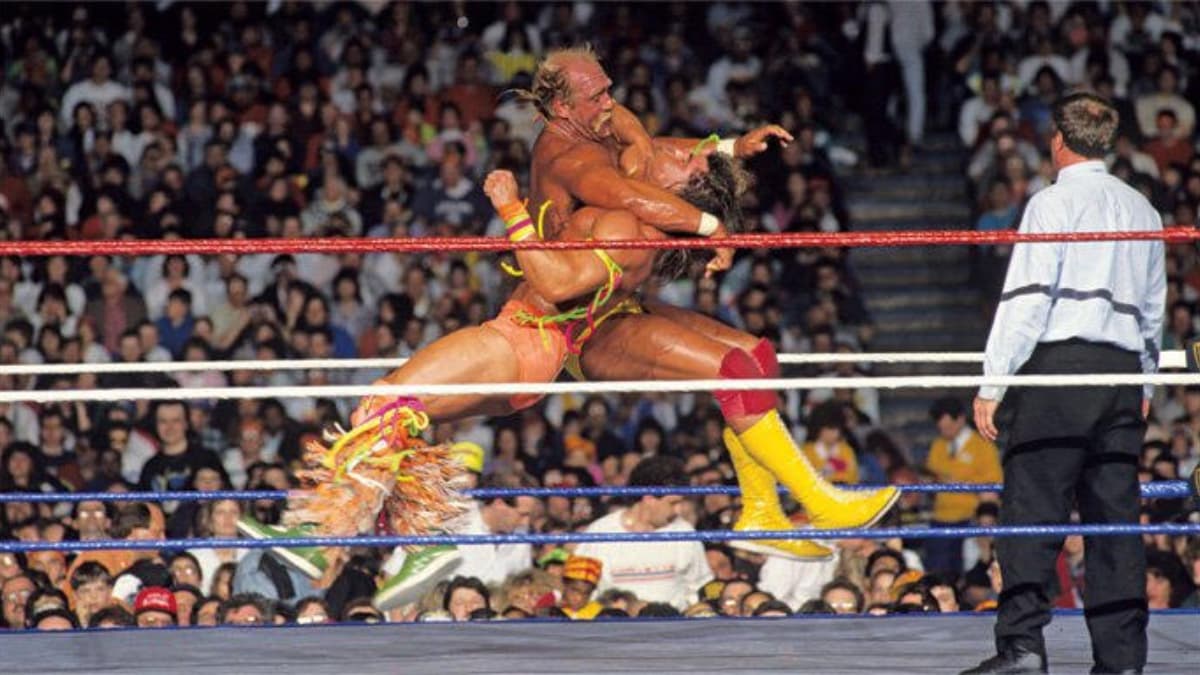
A reported crowd of 67,000-plus was split between who they favoured. Half went for the time-tested hero of yore, others for the clear successor. All the responses combined to soundtrack perhaps the most intense, most unpredictable main event in WWF history to that point.
The two wrestlers pulled it off, too. Hogan called the spots while Warrior capably followed, and each dramatic beat built on the previous one. The only flaw was a totally-knackered Warrior nearly collapsing in the final stage, but he kept it together long enough to carry out the finishing sequence. After Hogan barraged Warrior with the three punches and the big boot, the WWF Champion attempted the big leg drop, only for Warrior to move away. As Hogan lay stunned, Warrior capitalised with the big splash, pinning the Hulkster in the centre of the ring. The Ultimate Warrior had done it.
An emotional torch-passing moment followed. Hogan handed over the Winged Eagle and endorsed his conqueror, before riding off on the motorised ring cart, while Warrior celebrated beneath a hail of pyro, holding both men's singles titles aloft.
The plan was for The Ultimate Warrior to be the man of the 1990s, the brasher, more kick-ass update to the safer Hulkamania that preceded it. It didn’t quite work out that way, however.
For a number of reasons, The Ultimate Warrior just couldn't get out of Hogan's shadow. When Randy Savage took over as WWF Champion in 1988, he may not have outsized Hogan, but many fans accepted him as a worthy titleholder and business remained strong with the Macho Man holding the big belt. The same couldn't be said for Warrior. For much of the rest of 1990, WWF's metrics began sagging. Before the end of the year, Vince McMahon was making arrangements to reinstate the ageing Hulk Hogan as the top star once more.
Warrior’s inability to escape Hogan may have even began at WrestleMania VI when Hogan kicked out of Warrior’s splash at 3.1 and was involved in Warrior’s post-match celebrations, with some accusing The Huckster of putting the spotlight on himself when the moment was supposed to be about Warrior scoring the biggest win of his life.
Hogan's shadow continued looming after the show, even when he took a sabbatical during the spring and early summer. Hulk was written out following a storyline attack by Earthquake but he became the subject of a letter-writing campaign that targeted young fans wanting to send well-wishes to their hero. The campaign was incessantly promoted during the early summer of 1990, so even when Hogan was gone, he was still treated like a big deal.
Hulk Hogan wasn’t to blame for everything, though. The Ultimate Warrior simply didn’t have a lot of strong challengers. Mr Perfect and Rick Rude had already lost to the former Dingo Warrior and there were few viable threats to Warrior. While Hulk Hogan always seemed to have a conveyor belt of new challengers, Warrior was presented with opponents that fans had seen him face before.
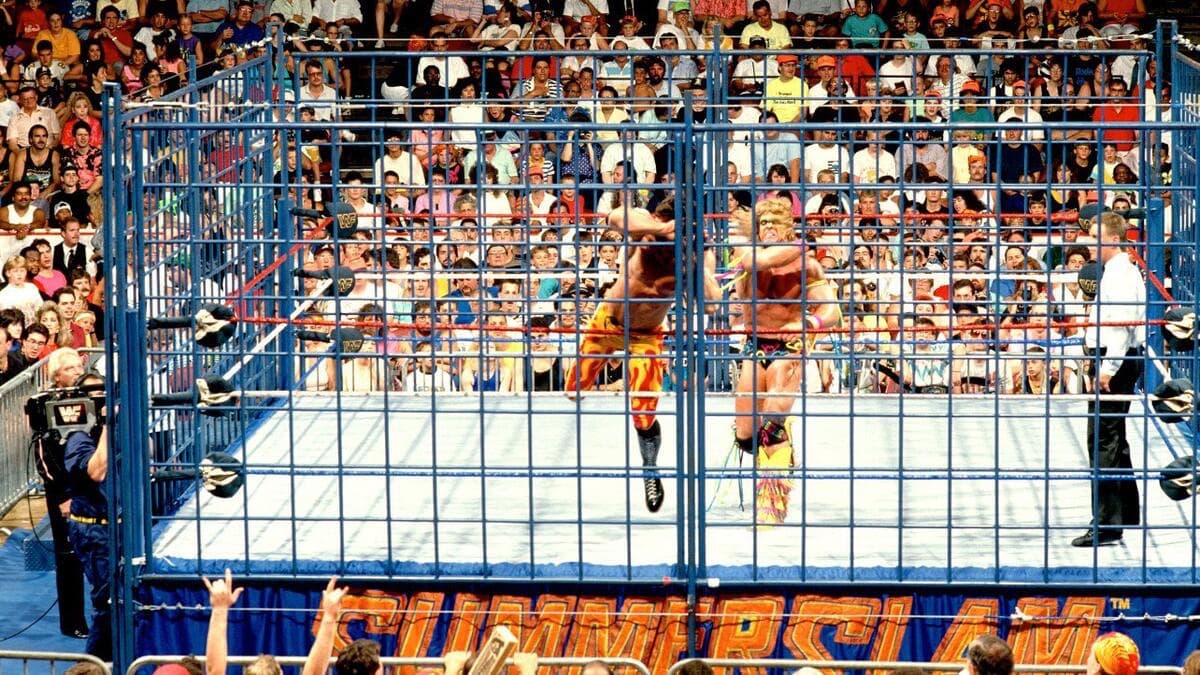
The Ultimate Warrior character itself also didn’t help matters once Jim Hellwig reached the top of the mountain. While the snarling maniac that grunted in riddles was cool in his own right, he was by no means a replacement for what Hulk Hogan represented as a relatable human being, by pro wrestling standards anyway.
Warrior’s WrestleMania VI soliloquies alone, especially the one where he talked about death and turbulence aboard Hogan's personal aircraft, revealed a man less superhero and more twisted loner. Hogan was Superman, but Warrior was Batman, if Batman had his dialogue written by a sleep-deprived English literature student.
The WWF understood this was a problem and tried to humanise Warrior, whether by having him bring a young Warrior fan out of the crowd for a segment, or briefly giving him a minimalist face-paint design that revealed more of his face, or by booking him for more talk show appearances. No matter the effort, business with Warrior on top remained down.
With Hulk Hogan back in the fold by the end of summer 1990, the WWF set up their plan for 1991. The company would book Warrior to drop the title at the Royal Rumble to a now anti-American Sgt. Slaughter and use Slaughter to transition the belt back to Hogan at WrestleMania VII, all the while cashing in on rising tensions in the Persian Gulf and the increased patriotic fervour stateside.
Warrior did the honours as asked, and moved on to a feud with Savage. The two would face off in the second-biggest match at WrestleMania 7, with the loser being forced to retire. Said loser was to be Savage, who was genuinely looking for a way out of wrestling in 1991.
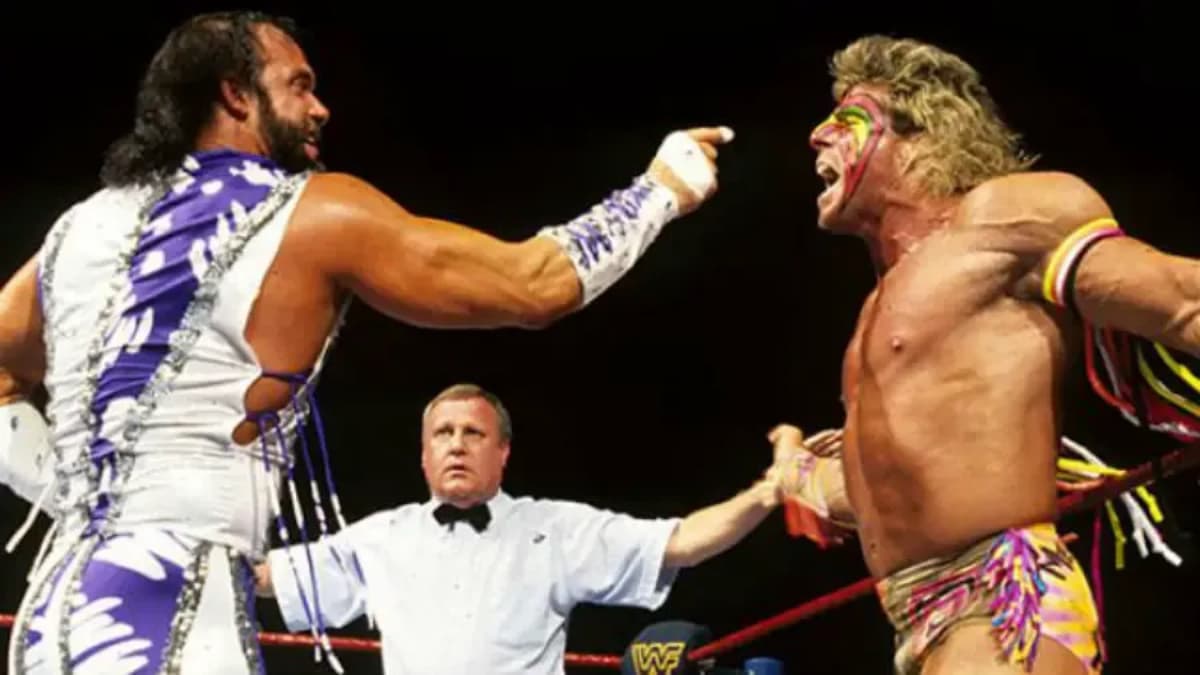
Warrior and Savage's match was one for the ages, a highly-dramatic pathos play that culminated in Warrior vanquishing his equally-manic foe. Warrior then exited stage left, giving the spotlight to Savage for his emotional reunion with Miss Elizabeth in a classic WrestleMania moment.
Amid all that pomp and circumstance, The Ultimate Warrior wore a pair of trunks with a curious airbrush detail. On the back was an image of the WWF Championship surrounded by the words, ‘MEANS MUCH MORE THAN THIS,’ suggesting there was some bitterness from Jim Hellwig over how his WWF Title reign turned out.
That bitterness only continued to fester as 1991 continued. In July of that year, after Warrior had already been advertised to team with Hogan in a three-on-two attraction at SummerSlam the next month, Warrior penned a letter to Vince McMahon making monetary demands, as well as demanding special contractual considerations going forward, such as less working days and better cuts of merchandise sales. The implication was that Warrior was willing to stay home until he got what he wanted.
Days later, McMahon sent a response, agreeing to all of Warrior's demands, and ended the letter with some warm sentiments that indicated that Warrior was his friend.
That was all gone by SummerSlam 1991. As soon as The Ultimate Warrior arrived at the locker room following his match, he was given a letter written that day by Vince McMahon informing him that he was suspended indefinitely from the WWF. McMahon added that he only agreed to Warrior's demands to ensure that he worked SummerSlam as advertised, and now that Warrior did that, he could go home and rot for all he cared.
Seventeen months earlier, Warrior was assuming the top spot in the WWF, dethroning the unassailable Hogan to become king of the wrestling world. Now, he was just a face-painted pauper that crossed the boss, and a man whose world title reign flopped at the box office.
That wouldn’t be the end of The Ultimate Warrior and the World Wrestling Federation, however. Hulk Hogan’s name had been publicly tarnished by his links with steroids and the plan was for WrestleMania VIII to be Hogan’s last match before he took a break from the industry.
That evening in Indianapolis, Warrior made a surprise return to the WWF, saving Hogan from the clutches of Sid Justice and Papa Shango. It was the second time that Warrior would try to pick up where Hogan left off, two years after the failed first attempt.
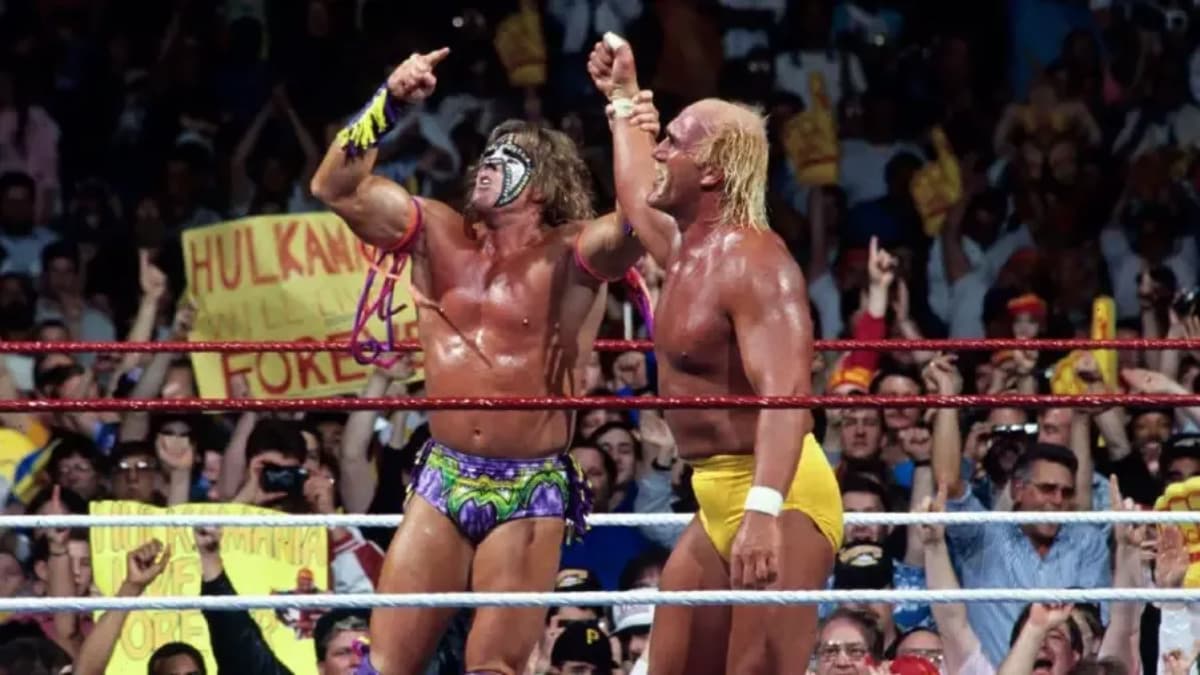
So much had changed in just two years, though. The WWF was now sagging under the weight of scandal, public scrutiny, and audience erosion. The roster was also thinning out as the company lost a number of reliable wrestlers and and replaced them with the less-skillful remnants of a decayed territory system.
Next to Randy Savage and Ric Flair, The Ultimate Warrior was the only individual on the roster that at least had copious experience at the top of a national organisation. The Undertaker, Bret Hart, and Shawn Michaels would all have their time at the top, but the level of prestige had never been thinner in Vince McMahon's WWF.
The Ultimate Warrior's second run wasn't all that prestigious either. A mindless feud with Papa Shango resulted in Warrior being afflicted with laughable curses, and there was also the fact that this slightly-leaner Warrior looked a little too human, and it actually prompted long-standing urban legends that this Ultimate Warrior was a new Warrior because the previous one had died.
Aside from a well-executed feud with Randy Savage over the WWF Title that played on the two men's paranoia and distrust of one another, Warrior's comeback run wasn't anything special. While there were rumours that the WWF was interested in transitioning the belt from Savage to Flair to Warrior at one point, McMahon instead decided to pull the trigger on tireless workhorse Bret Hart.
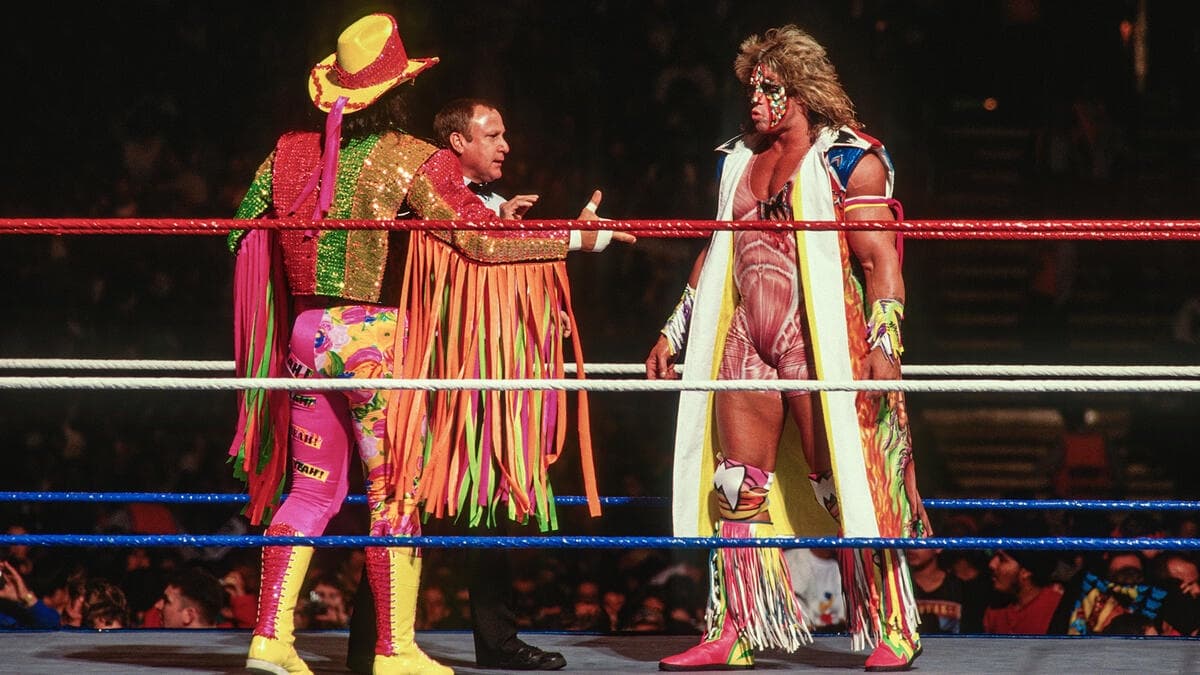
It was a sound decision for a lot of reasons, not least of which being that The Ultimate Warrior's WWF days were numbered. In November of 1992, Warrior and Davey Boy Smith were both fired by the company, reportedly for receiving shipments of human growth hormone. The WWF’s anti-drug policy doomed the Warrior, casting him out of the organisation for the second time in 15 months.
More and more, The Ultimate Warrior was feeling like an anachronism. A grunting and growling muscleman with metalhead hair and a wasteland paint job trying to persist through the edgier, more-detached and sardonic 1990s.
It was never the same for The Ultimate Warrior after his 1992 firing. What followed were random indie appearances in the mid-1990s, a brief return in 1996 that reeked of desperation for both sides, and a disastrous WCW run in 1998 which led to one of the worst matches on American pay-per-view history in a rematch with Hulk Hogan.
By the end of the 1990s when the youth in the United States were listening to Limp Bizkit and Korn, The Ultimate Warrior was firmly a relic from another time. He had become the wrestling version of a mullet; out of style, representative of another time, mostly silly, and any appreciation towards it was surely ironic.
The man who was supposed to rule the World Wrestling Federation for the 1990s was gone from professional wrestling for 30 per cent of the decade.
The Ultimate Warrior’s reputation has improved since the end of the last millennium, however. As nostalgia has taken hold, attitudes towards the one-time WWF Champion have softened. Not for the personal views or for the stories of his attitude, but for the Warrior's work and how he embodies the spirit of that specific window in time.
More than a quarter century after his last worthwhile match, The Ultimate Warrior's contributions to wrestling are still felt in a myriad of areas. His impact cannot be denied.
Yet, it is also fair to say that in spite of the adulation and appreciation we can have for Warrior as a genuine Hall of Fame character, his peak occurred far earlier than many expected, and perhaps many even realised. Warrior never held a meaningful championship after January 1991, one year into the decade he was supposed to own.
Bad luck, audience disconnect, perhaps a little subterfuge, and numerous other conflicts began The Ultimate Warrior's downhill slide extremely prematurely. What was supposed to be the start of the next phase of pro wrestling evolution ended up being the apex of a celebration that was already in the process of folding the tent.
The Ultimate Warrior may have had the strangest career arc of any wrestler that's best remembered for being a top guy in WWE. His peak was shorter than we tend to realise, and yet, he's so unforgettable that it feels like he was on top forever.