Why Brock Lesnar Quit WWE In 2004
Everything you need to know about Brock Lesnar's 2004 WWE exit

Feb 11, 2026

Everything you need to know about Brock Lesnar's 2004 WWE exit
Feb 11, 2026
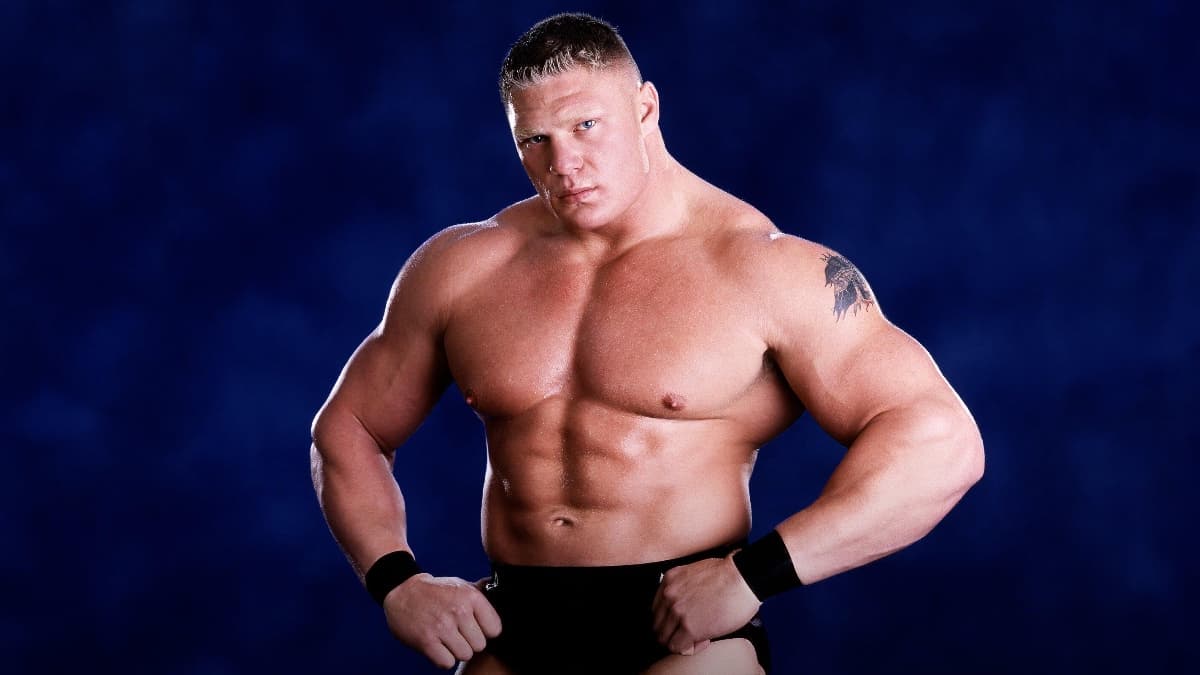
When Brock Lesnar first erupted onto the WWE scene at the beginning of the Ruthless Aggression era, people quickly predicted he would be a main event mainstay for years to come. That would ultimately be true, but only during his second WWE run which kicked off in 2012 and has lasted well over a decade.
Lesnar’s first run ended prematurely as Brock went from making an explosive debut, to headlining pay-per-views, to racking up accomplishments, to one day leaving WWE in his rear view, going from can't miss to won't miss it.
Fresh off winning the NCAA Division I heavyweight wrestling championship in 2000, Lesnar signed with WWE and reported to Ohio Valley Wrestling, where he was paid handsomely to train within their system, with his first contract being worth $250,000 per year as an untrained pro wrestling prospect. For context, that’s only $100,000 less than the beginning salary of a WWE main roster wrestler in today’s WWE.
Less than two years on from putting pen to paper, Lesnar arrived on the main roster, debuting on the Raw after WrestleMania X8. As his manager Paul Heyman looked on, Brock demolished an assortment of wrestlers vying for the Hardcore Championship, drawing gasps from the audience as he displayed his power and athleticism.
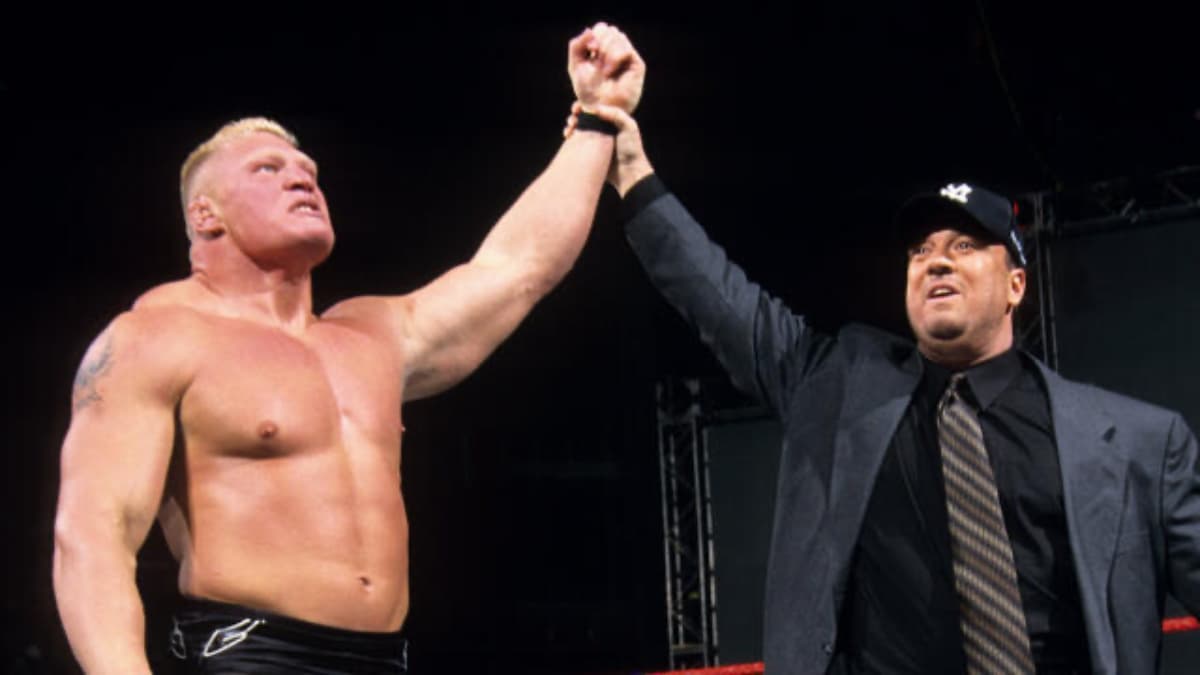
Life for Lesnar continued along those same lines as he brutalised various mid-card wrestlers through unannounced, unprovoked attacks, all of them mere windows into what Lesnar could do in a standard match.
His first true rivals were The Hardy Boyz in an ideal feud. If Lesnar were a cataclysmic force of nature, then the aerodynamic, bumptastic Hardys were the ideal "human driftwood" that could get swept up in Brock's unnatural fury. After dismantling Matt and Jeff on a regular basis, Lesnar continued cutting his swath of destruction into the King of the Ring tournament, where he pummelled Test then Rob Van Dam en route to the crown.
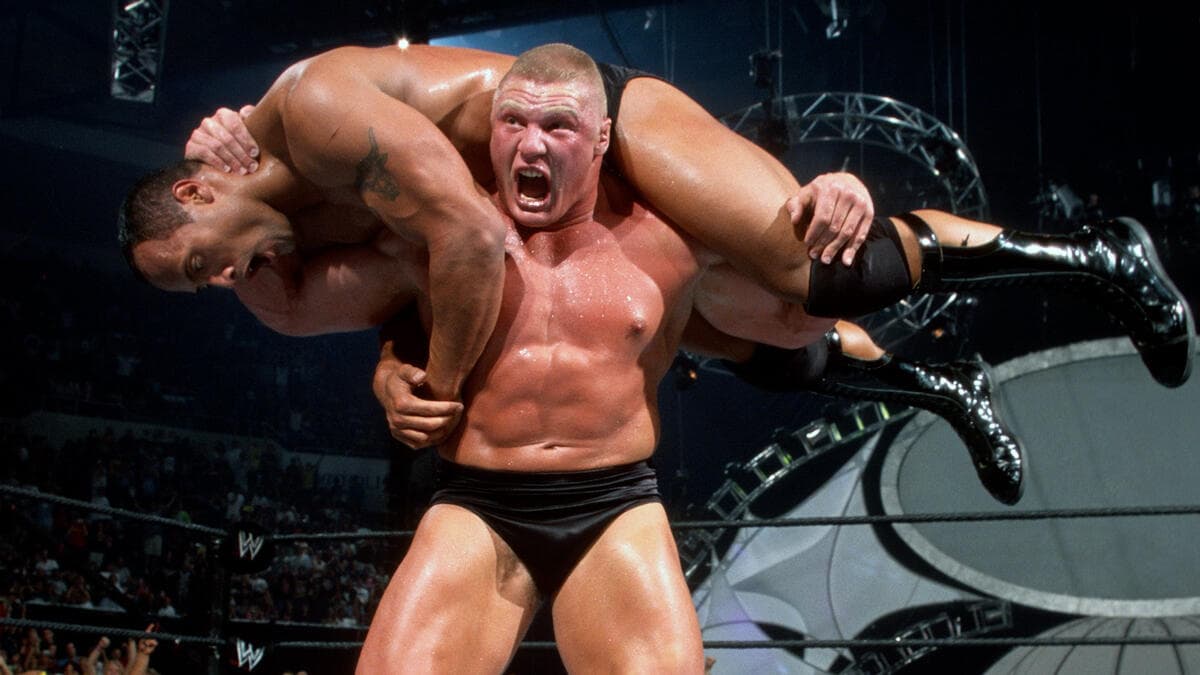
With the royal honours came the fast track to the WWE Championship in a match against The Rock at SummerSlam 2002. To crystallise Lesnar as an unflinching bad ass, both he and The Rock appeared in training vignettes to hype up the SummerSlam match, with Brock being shown performing inhuman feats like jogging down the roadside with an uprooted tree over one shoulder, or submitting himself to a 15 minute post-workout bath completely submerged in ice-filled water.
As expected, the torch was passed at SummerSlam as Brock became the youngest world champion in the history of World Wrestling Entertainment to that point.
Lesnar's first reign was defined by his hate-filled feud with a fellow monster in The Undertaker. There were unnecessary bits of soap opera injected into the story, but those all went by the wayside once the two brutes reached No Mercy. It was there that Lesnar retained the WWE Title in one of the goriest Hell in a Cell matches of all time, as well as one of the greatest bouts of its type.
Brock lost the title the following month to The Big Show at Survivor Series, after Heyman turned against his client. From there, Lesnar became a babyface, chasing Big Show, and later Kurt Angle, for the championship that had been stolen from him.
After winning the 2003 Royal Rumble, Lesnar went on to WrestleMania 19 in Seattle to challenge Angle for the gold. Despite badly botching a shooting star press to the point where he nearly broke his own neck, Lesnar rebounded to finish Angle with an F5, capturing the WWE Title for a second time.
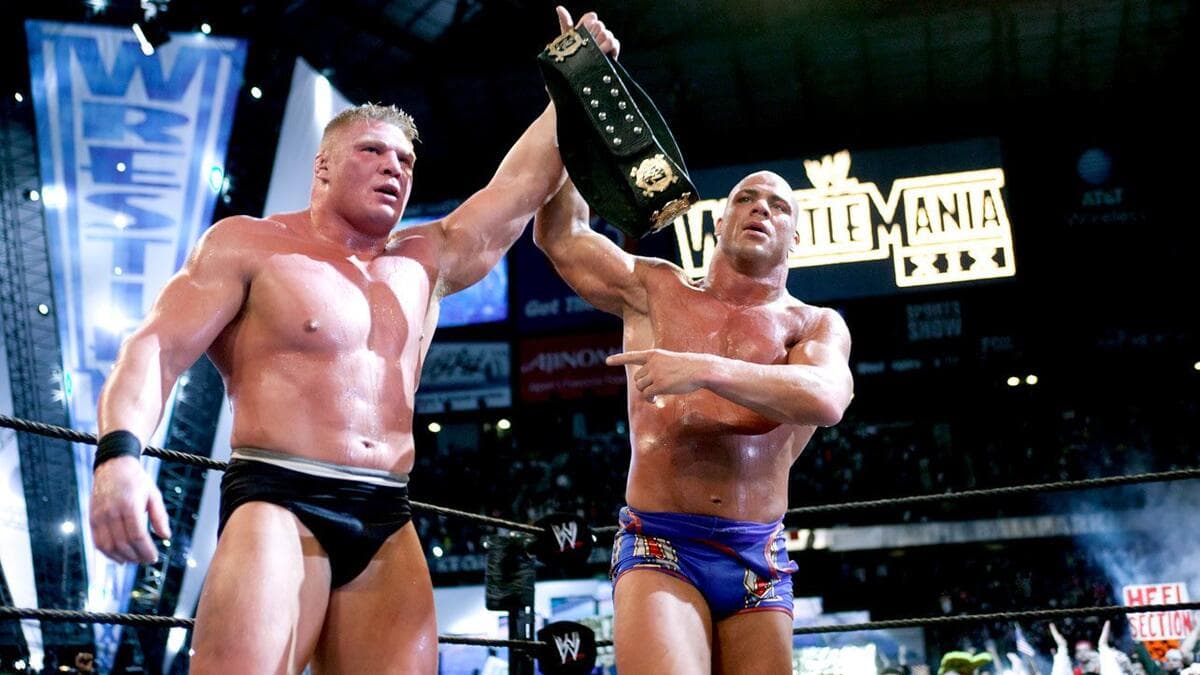
Two world title reigns, a King of the Ring crown, and a Royal Rumble win all in the first year of his main roster run. A new contract followed soon after and in July of 2003, Lesnar put pen to paper on a new seven-year contract with a downside guarantee of $1 million per year. If seen through to the end, Lesnar would have been a full-time WWE star into the summer of 2010, shortly before his 33rd birthday. Lesnar barely made it eight months into the deal, however.
Even as Lesnar signed the contract in 2003, he was already weary with life on the road. As WWE Champion, Lesnar was going to be depended on as a headline attraction. His name and face would sell pay-per-views, attract a TV audience, draw for house shows, and be used for crossover appeal through various media appearances.
As such, unless he was seriously injured to the point where travel wouldn't be advisable, Lesnar would be touring the globe as one of the company’s top talents. Despite signing such a long-term deal, however, Lesnar had quickly come to realise that he wasn’t in favour of such a life.
Going back to his first reign as champion, Lesnar went to extreme lengths to mask serious physical pains. He has claimed he was dealing with broken ribs, as well as a torn PCL in his right knee. Lesnar has admitted to overindulging on Vicodin, while washing them down with copious amounts of alcohol. A part of the toll he paid for the self-medication was an inability to take in the natural highs of his mega-star life.
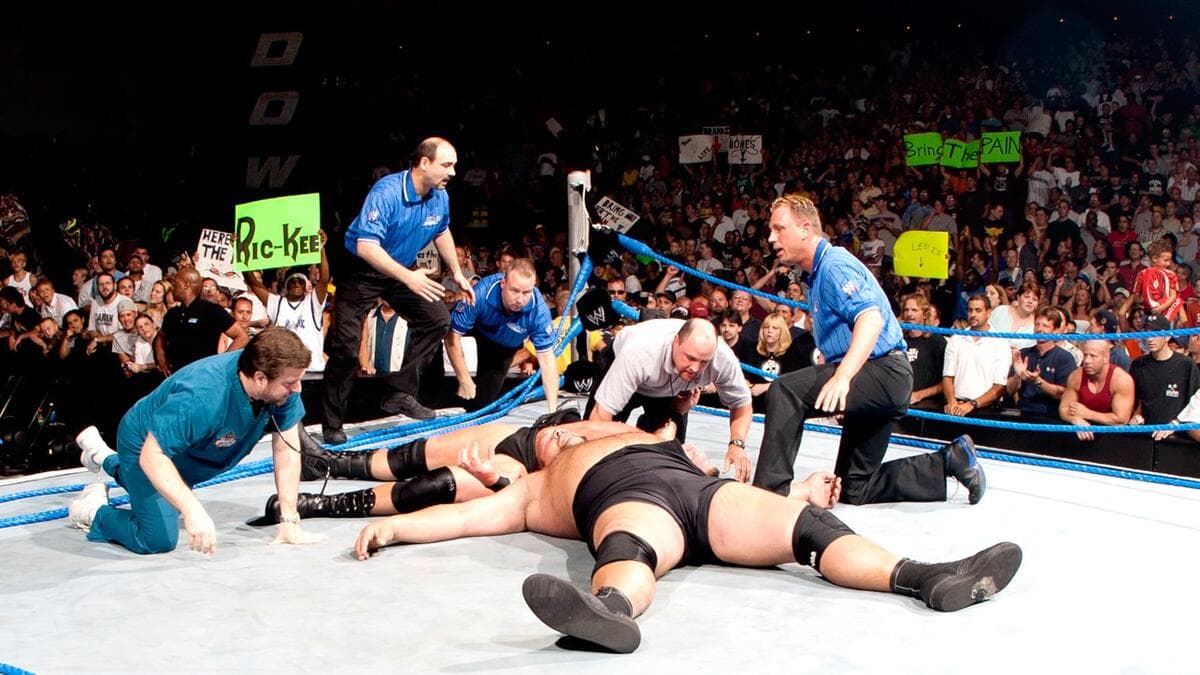
In his memoir Death Clutch published in 2012, Lesnar wrote: "You want to know why there aren't more stories in this book about my pro wrestling days? Because the truth is, I don't remember a lot about that period of my life."
Lesnar did, however, estimate running through a bottle of vodka every day or two, as well as "a couple hundred" pain pills every month. By his own account, Lesnar was losing sight of reality while pushing through the WWE grind. The headliner money was appealing to him, but he lamented not being able to enjoy his life to any real degree. He'd ask for time off here and there, but was unable to get anything substantial granted due to his status as the SmackDown brand's top star.
In addition to dangerously self-medicating, Lesnar was looking for other ways to make the superstar lifestyle easier on himself. To make travel less stressful, he went to the trouble of buying his own plane and having a friend fly him around to avoid the hassle of public airports.
Physical and mental pain and travel issues weren't all that gnawed at Lesnar, however, as he also grew tired of what he perceived to be head games from the company's top officials.
In his memoir, with years of hindsight, Lesnar noted the traps that pro wrestlers fall into when they live day by day within the WWE system. Lesnar felt the manipulation from Vince McMahon and other officials was so strong that wrestlers would be willing to subject themselves to a hellish lifestyle just to "get ahead" in the organisation.
As Lesnar wrote: "Vince can suggest anything he wants, and as long as he says, 'It will be great for your character,' there's a bunch of guys ready and willing to do whatever he says. They are brainwashed, and they don't even know it."
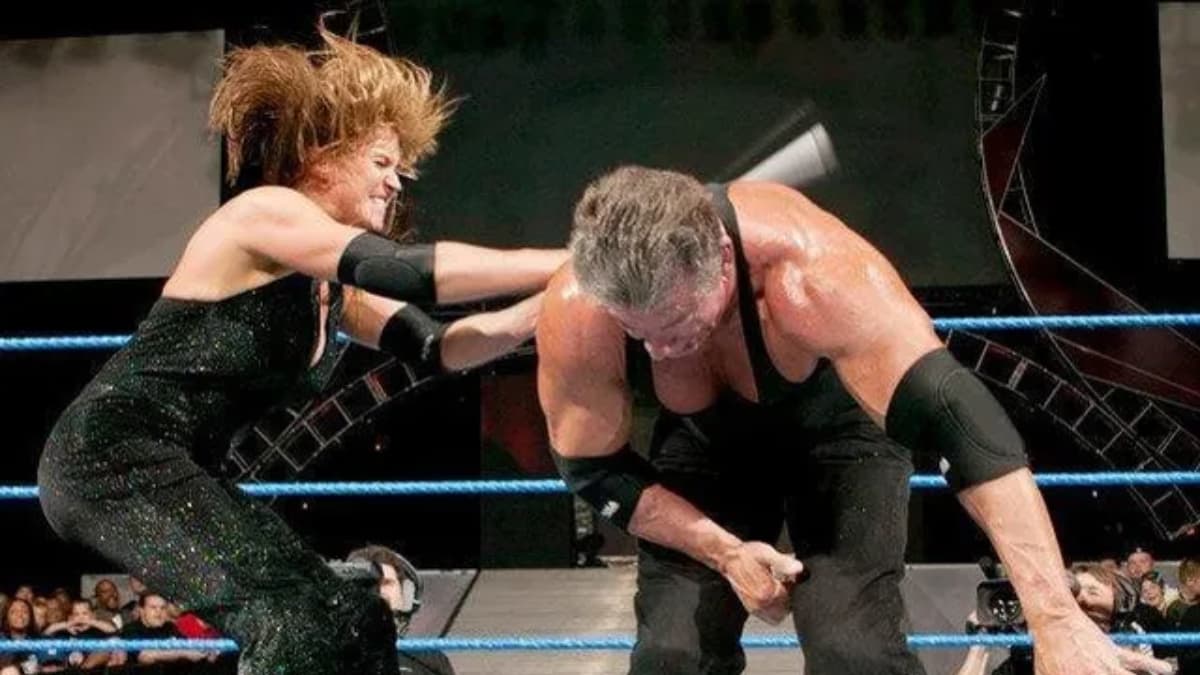
Brock admitted he himself wasn't immune to the hard sells. He felt he allowed John Laurinaitis and Jim Ross to talk him into the shooting star press spot at WrestleMania 19, which he claims he hadn't previously been keen on.
By the time Lesnar was broached by McMahon about dropping the WWE Title to Eddie Guerrero in early 2004, he had lost faith in the bosses. As Brock described it, the pitch to lose to Guerrero was done in such a way that McMahon downplayed that result and instead strongly emphasised the ensuing WrestleMania XX match with Goldberg in which Lesnar would squash the outgoing former WCW star. McMahon's pitch reportedly emphasised that Lesnar vs. Goldberg at WrestleMania was so big that it wouldn't need to be for the title.
Phrased as it was, Lesnar felt that McMahon softening the blow of the title loss was the WWE Chairman's shrewd attempt at hard-selling Lesnar on a more positive result, instead of just levelling with him and saying, "Hey, we want you to lose to Eddie, nothing personal, we want to capitalise on his popularity."
Already weary from the travel, as well as the constant aches, and the lack of a life at home, Lesnar didn't appreciate the apparent "carny" approach from his boss, the latest in a long line of grievances he held against WWE and the handling of his life and career.
The next grievance would emerge during the company's tour of South Africa.
No longer the WWE Champion, Lesnar was booked to work triple threat matches with Eddie Guerrero and Kurt Angle for the WWE Title on the South African tour. However, the match was changed to just Guerrero vs. Angle with the reasoning being that the duo needed to work on their upcoming match for WrestleMania 20.
Lesnar was instead given Hardcore Holly to work with, the same Hardcore Holly that Lesnar put away in six minutes at the previous month's Royal Rumble.
While Lesnar has said he likes Holly, he felt it was beneath him to take two ungodly-long flights to South Africa and back - on a commercial liner, not his personal plane - just to virtually squash Holly in relatively short matches. He tried to ask for a little time off instead of making the tour, but was reportedly told by Laurinaitis that he was "needed" on the cards.
The wearying travel continued when Lesnar flew all the way back to the United States. He flew into New York, boarded a flight to Atlanta, then caught another connecting flight to Savannah, Georgia just so he could wrestle Holly again at the SmackDown tapings.
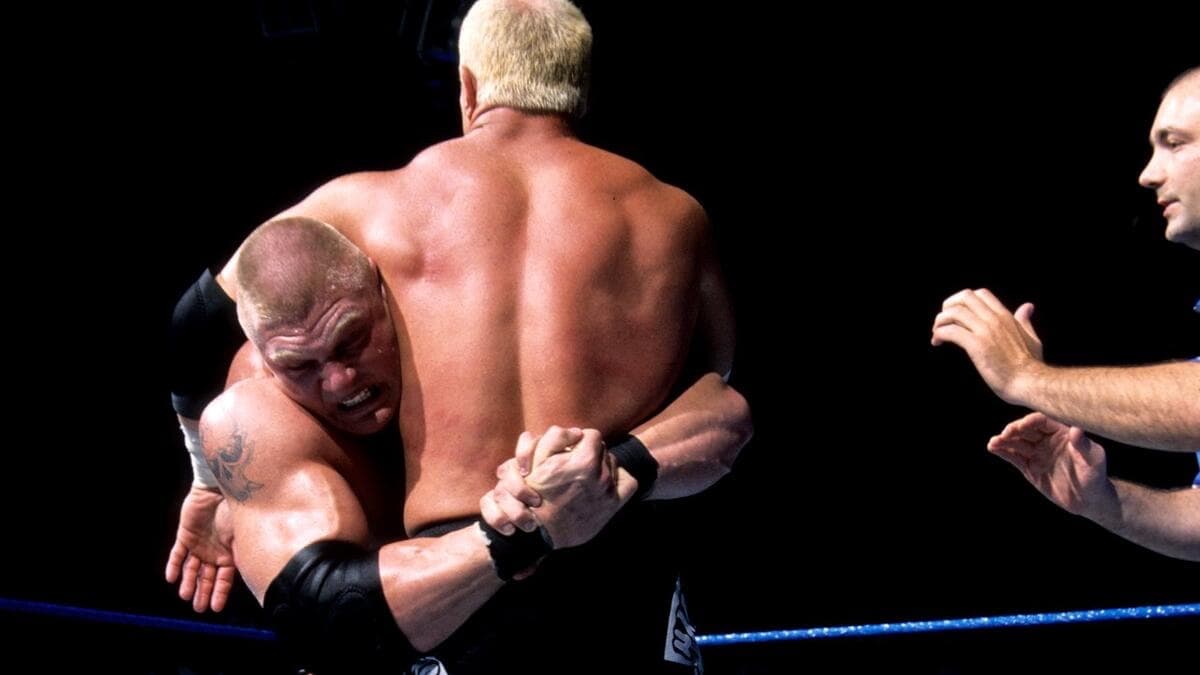
Lesnar had had enough. The travel, the orders from his bosses, the constant pain, the inability to lead a normal life under these circumstances. The money was no longer worth it, so Brock Lesnar decided he was quitting.
That day in Savannah, Lesnar had a tense meeting with Vince McMahon, where he told the boss in no uncertain terms that he was quitting. McMahon was unable to move Lesnar from his stance, and the two ultimately agreed that Brock would stay on through WrestleMania before he exited the company.
Before the following week's SmackDown taping, Lesnar addressed the locker room in a pre-show meeting, informing everyone that he was leaving after Mania.
After that, Lesnar’s departure leaked on the internet and led to one of the most awkward matches in WrestleMania history, as the crowd inside Madison Square Garden knew full well that both Goldberg and Lesnar were headed out the door as soon as the match was over. The fans not only booed both men for ostensibly deserting the company, but they soundly rejected the energy both men were putting on display.
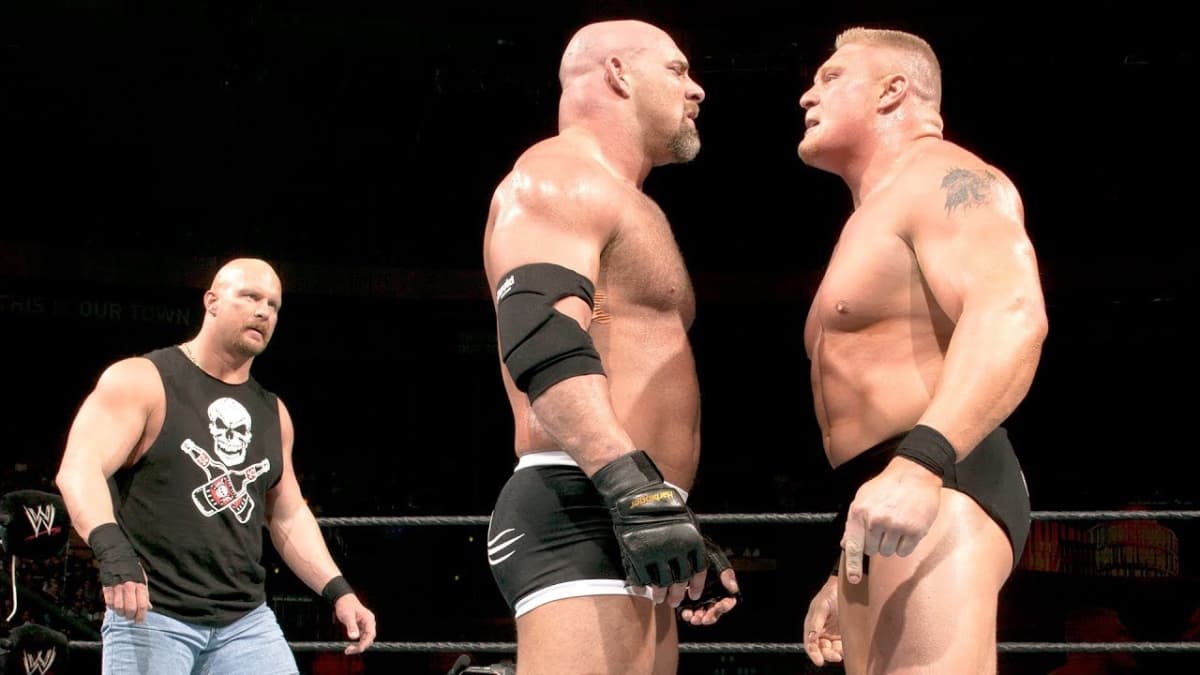
Whereas their WrestleMania 33 speed run is considered one of the best sub-five minute matches in wrestling history, they put together an uninteresting 14-minute slog at WrestleMania XX won by Goldberg. The most cheers went to Steve Austin, the guest referee who beat up both Lesnar and Goldberg after the match was over.
With the match now in his past, 26-year-old Lesnar had plenty of options at his disposal. The release he signed with WWE in order to leave the company would quickly prove to be a problem, though.
In his haste to get out of the same WWE that had rendered him moody and miserable, Lesnar signed his release form before his lawyer even had a chance to read it over and get back to him. What an impatient Lesnar hadn’t ran past his lawyer was the release stipulated that Brock was not allowed to participate in any other sport or sports entertainment-product until mid-2010, over six years away.
Somehow, American football was exempt, as Lesnar tried out for the Minnesota Vikings of the NFL that summer. Playing defensive line, Lesnar survived deep into the preseason but he was one of the team's final mandated cuts before the regular season began. He then opted to discontinue chasing the football dream.
The following year, Brock Lesnar returned to pro wrestling and debuted for New Japan Pro-Wrestling, where he immediately won the IWGP Heavyweight Title. This was a clear violation of his release stipulations and it led to a long court battle between WWE and Lesnar.
Somewhat incredibly, WWE agreed to settle with Lesnar due to concerns that a judgment may be made against the legality of their non-compete clauses.
Lesnar was now free and clear to continue wrestling, but also transition to mixed martial arts. Not only did Lesnar win the UFC Heavyweight Title in 2008, but he became one of the organisation's top box office attractions. The 1.6 million buys for his 2009 fight with Frank Mir was a promotional record that stood for seven years. Brock would co-headline four UFC pay-per-views that surpassed one million buys during his time with the company.
After Lesnar's MMA retirement at the end of 2011, he made the transition back into pro wrestling, where his box office track record allowed Lesnar to agree a part-time schedule with WWE as he secured maximum money for minimum appearances.
With a chance to reacquire Lesnar in 2012, WWE deferred to Brock's box office appeal and name value, as well as his preference to live as simple a life as possible, hence the part time deals that many fans tend to groan at which have continued well into the 2020s and been adopted by some of WWE's other top stars, such as Roman Reigns.
Brock would ultimately re-emerge on the Raw after WrestleMania 28, 10 years on from his WWE debut. He has been a main event talent for WWE across multiple runs since 2012 and Lesnar is now a seven-time WWE Champion and three-time Universal Champion.