The Rise And Fall Of The WWE Hardcore Title
History of the WWE Hardcore Championship

Jan 15, 2026

History of the WWE Hardcore Championship
Jan 15, 2026
When some fans think of hardcore wrestling, they imagine the sort of skin-ripping, bone-breaking, life-altering mayhem that makes state athletic commissions quiver in terror. Others, however, think of a more sanitised craziness that combines brutality with humour.
In 1998, the World Wrestling Federation introduced a championship that at times ran the gamut of those definitions, but overall, tended to veer more toward comedic chaos than anything else.
In the mid-1990s, American professional wrestling hit a major slump. For several reasons, audiences began tuning out of the WWF more and more, while WCW had still yet to turn a profit despite being backed by Ted Turner's fortune. A part of the reason for the audience erosion was the fact that the product and the fans went in opposite directions.
Both the WWF and WCW became more homogenised, more heavily marketed towards children out of necessity than ever. The kids that used to watch wrestling when it was still semi-popular were now teenagers and young adults, and they weren't going to spend too much time watching something that fit their tastes less than ever before.
Those that didn't outright abandon wrestling had an alternative in ECW. Though not every American fan got Extreme Championship Wrestling in their market at the time, those who did found something that was way more interesting than Henry Godwinn vs. Adam Bomb.
Gradually, though, the WWF began to change. More violence found its way into the bigger matches, as while ECW was by no means a threat to WWF's place in the pecking order, Vince McMahon was losing a TV ratings battle with a WCW that rebuilt their brand on guttural shocks and fast-paced action.
WWE began to move more and more away from their child-friendly formula as 1996 continued as brutal, hate-filled matches like Hollywood Backlot Brawls, Boiler Room Brawls, Buried Alive matches, and a particularly jarring No Holds Barred contest between Shawn Michaels and Diesel illustrated a major tonal shift. This was, of course, joined by the WWE signing of Mick Foley as Mankind, who continued to his popular hardcore ways.
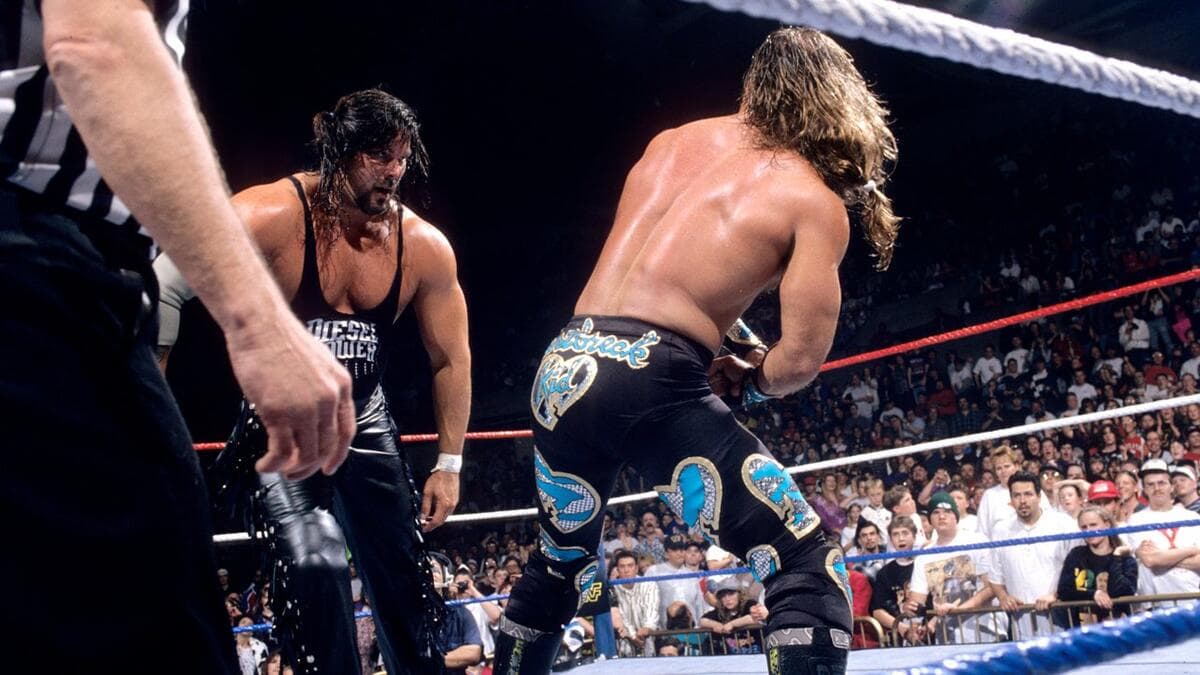
In two years time, hardcore wrestling cemented itself as the popular entrée on WWF's menu. Finding a main event pay-per-view match that didn't spill into the stands, didn't rely on weapons shots, and didn't feature copious amounts of outside interference, was rare. Chaos was the new normal in a WWF that righted their ship in quite literally extreme fashion.
By November of 1998, hardcore was hardly a foreign concept to the WWF. Yet, the company still decided to commemorate that loose principle with a championship that captured its spirit.
During a backstage segment with Vince McMahon and unlikely ally Mankind on the November 2, 1998 episode of Raw, McMahon asked the wrestler not to interfere in an upcoming match pitting The Rock against Ken Shamrock. To ensure his compliance, McMahon gifted Mankind the recently-minted WWF Hardcore Championship.
The true highlight of the segment was when, as McMahon was leaving, Mankind piped up with a hearty, "Thanks Dad!", causing the disgusted boss to briefly stop dead in his tracks.
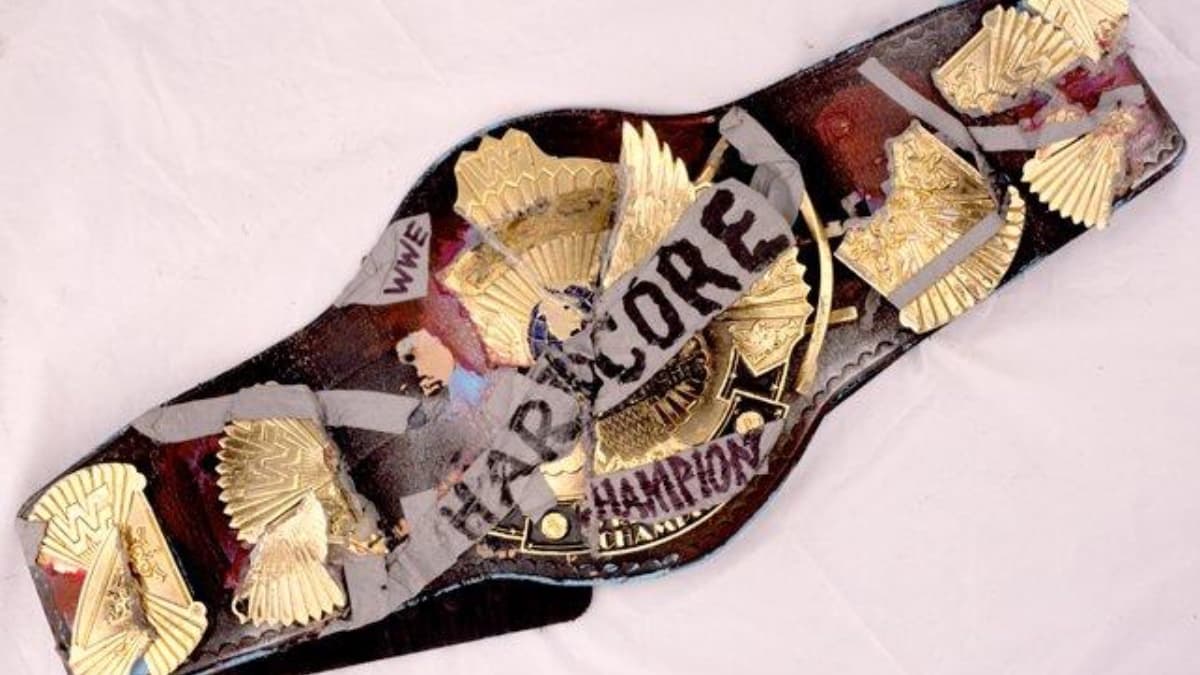
The Hardcore Title was a unique belt, being a replica version of the famed Winged Eagle version of the WWF Championship but with shattered and fragmented plates that were barely held togetherwith crude strips of duct tape that had the words "WWF Hardcore Champion" written in Sharpie across them.
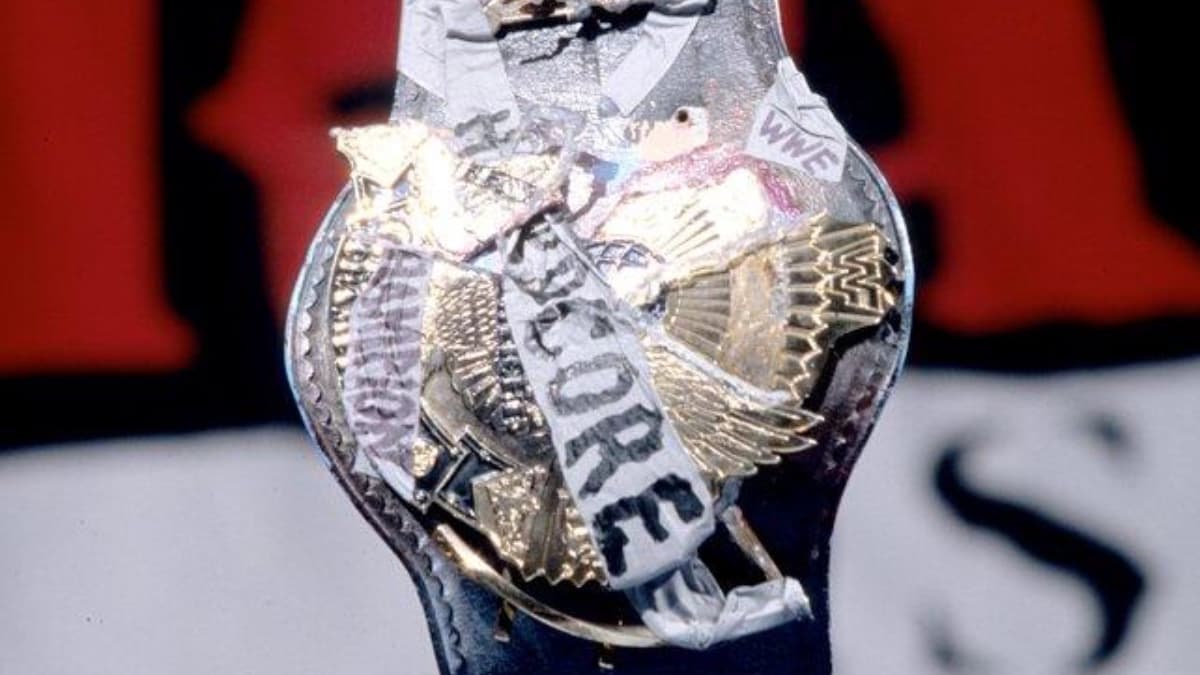
Some believe that the belt was actually the one that Mr. Perfect stole from Hulk Hogan during a 1989 angle, and subsequently smashed up with a hammer. While there is obvious credence to that idea, other sources have claimed that the belt Curt Hennig destroyed was so destroyed that they had to use a slightly-less damaged version for the remainder of that brief storyline. Whatever the case may be, a longtime fan can’t be blamed for thinking the two belts are one and the same, even if they might not be.
The first official match for the Hardcore Title took place on the following episode of Raw when Mankind retained his championship over Shamrock in an eight-minute match. While it could be debated whether or not the Hardcore Title needed to exist, as other portions of the show already featured out-of-control brawling, the match was a good first outing for the championship. The frenzied contest was a serious brawl between two hungry competitors, and the title was treated as something worth sacrificing for.
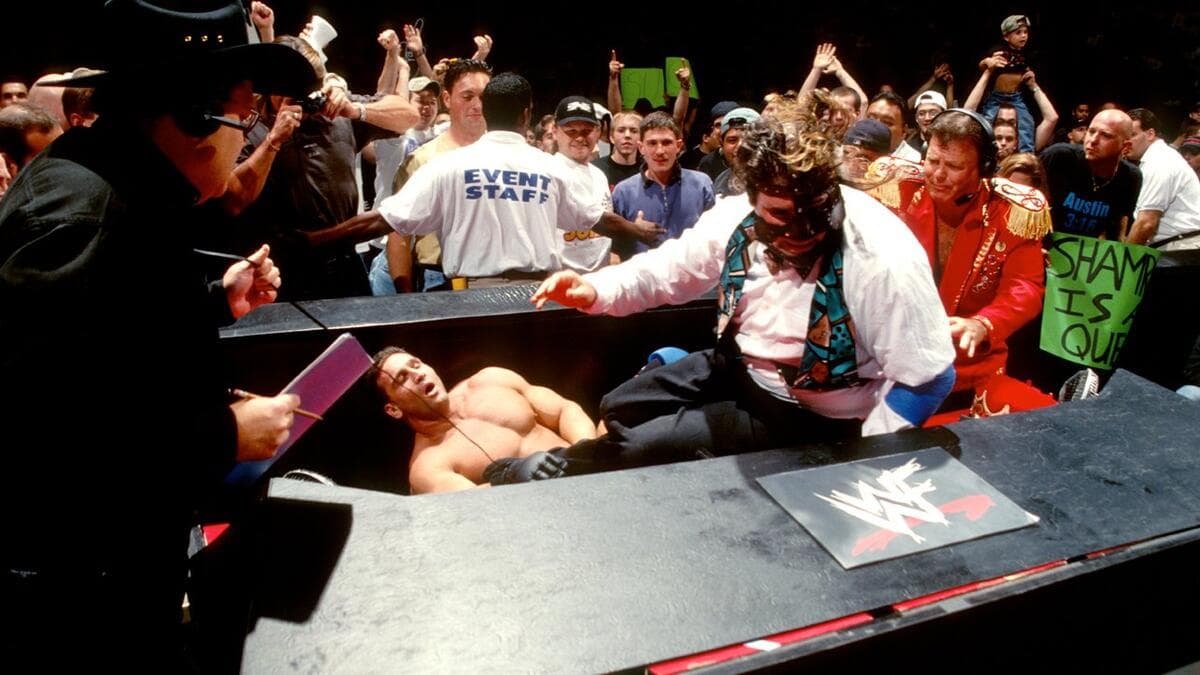
The title changed hands twice before the end of 1998. Mankind dropped the belt in a ladder match at the end of November to the Big Boss Man, who then lost it himself a couple weeks later to Road Dogg.
It was at this point that some of the potential of the hardcore matches began manifesting. Since falls counted anywhere, brawls would (usually as a rule) end up in the backstage area, where unconventional props could be implemented, and unlikely environmental scenarios could play out.
There was a certain novelty to seeing Hardcore Title matches spill into the cafeteria, or the parking lot, or other locations that broke up the monotony of a wrestling ring viewed for over two hours. In the crash TV era, appealing to diminished attention spans was high on the agenda.
This is also where the Hardcore Championship straddled the gamut of what the title could represent. While the matches still featured punishing blows and manoeuvres, there was also plenty of broad physical comedy, taking some of the sting out of seeing two men pummel each other senseless.
Al Snow was just the man to represent the title on both fronts. As a veteran wrestler with underappreciated athleticism and a cheeky sense of humour, Snow could meld his wrestling style with lots of slapstick comedy, and this hardcore division proved to be a strong outlet for him. His feud with Hardcore Holly not only produced enjoyable matches, but it greatly aided Holly, who had spent the previous five years banging his head on a lowered mid-card ceiling. Now a "serious" brawler, Holly thrived in the Hardcore Title scene, and his stoically bad ass demeanour contrasted well with Snow's hijinks.
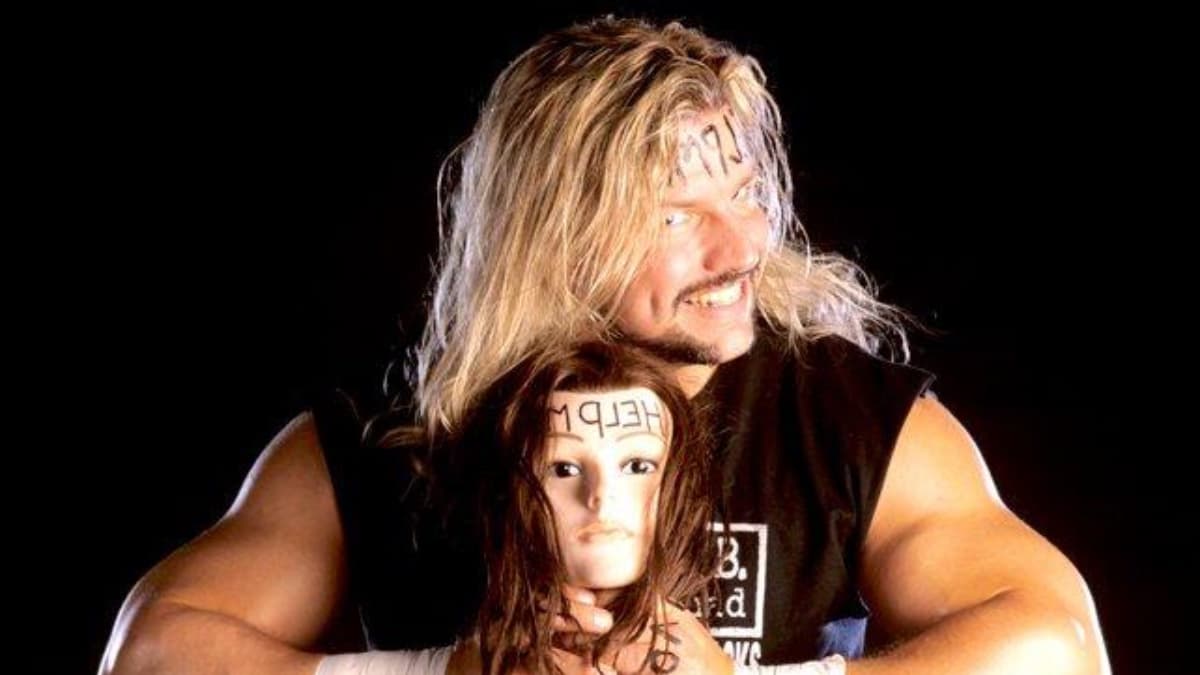
In that sense, the Hardcore Title was something of a rejuvenation machine. It wasn't simply a mid-card title like the European Championship, but it instead represented a division dependent on having offbeat matches. Wrestlers like Snow and Holly could redefine themselves within the division's confines, and then wrestle elsewhere on the card with some added freshness to them.
Throughout the remainder of 1999, the belt kind of just existed, though. Some of the early novelty had since worn off and Snow, Big Boss Man, and Test took turns carrying the gold, but the person that added new life to the championship was Crash Holly, although it was debatable if that was a good thing.
Crash defeated Test for the belt on an episode of SmackDown in February of 2000, and was quite happy to earn the gold. So happy, so elated, that he boldly proclaimed he would defend the title 24 hours a day, seven days a week, against any and all comers.
Taking the declaration literally, a number of mid-card wrestlers, chiefly The Mean Street Posse and The Headbangers, began hounding Crash in a number of public places, dragging with them some dutiful WWF referee. This did give us the rather amusing visual of Crash trying to shake off the Headbangers at Fun Time USA, at one point trying to elude the two via sliding boards.
While Crash's rule change did ramp up the harmless comedy that the championship could deliver, it sometimes became too silly. While other parts of WWF programming did gritty, hard-nosed brawling well enough that the Hardcore Title didn't need to provide it, the Hardcore Title sequences became unpredictable and predictable all at once - you never knew what was going to happen, but you knew what the general mood of those segments were going to be. And if you weren't feeling comedy that evening, you were probably out of luck.
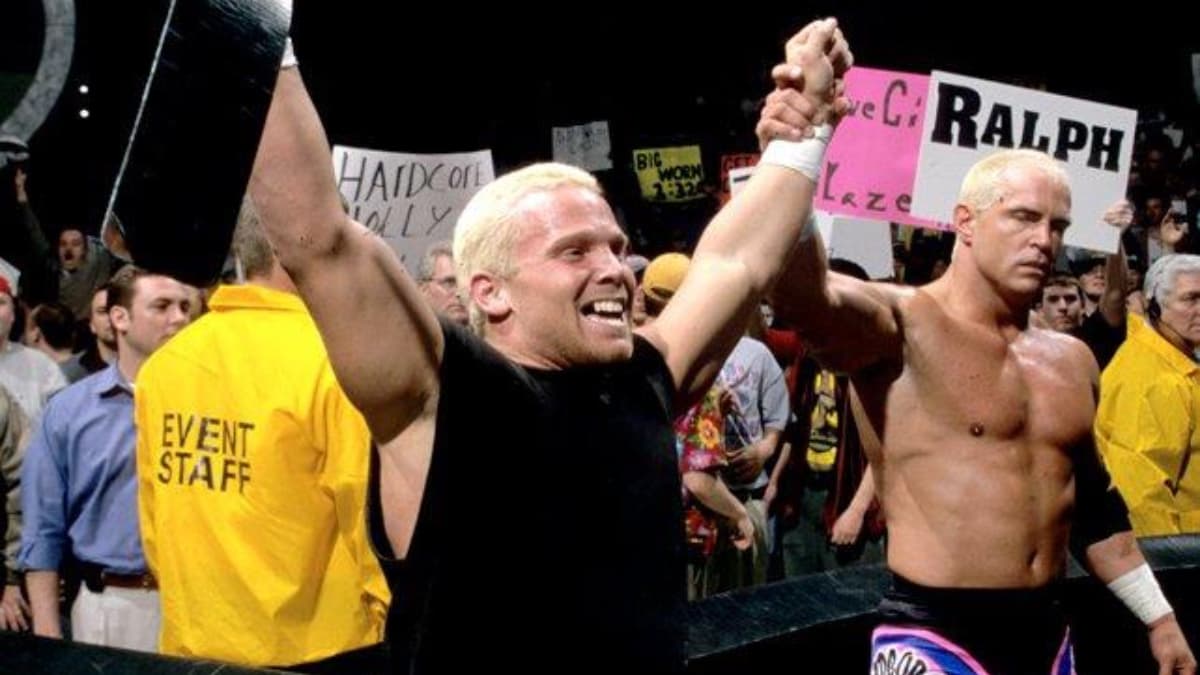
The continuity was also destroyed too. While there would often be a title match between Crash and an opponent, this would often result in a dozen wrestlers running interference trying to score their own pins, only for the original champion to win back the belt after four or five pinfalls, before they high-tailed it out of the ring and into the night.
The Hardcore Title match at WrestleMania 2000 illustrated some of the problems the title was facing when a sum of 13 wrestlers vied for Crash's belt in a "timed" title bout. Over the course of 15 minutes, the title could change hands any number of times in a scramble-esque match.
Despite this, you had long stretches where combatants weren't even going after the reigning champion, as well as enough title changes to kill off the novelty of winning the belt. Worse, the ending was botched, as Hardcore Holly accidentally won instead of cousin Crash due to the timing of the final pinfall attempt not being in sync with the arena clock. On a positive note, however, timed Hardcore Title matches made it into the SmackDown video games, and they were addictive fun, especially when playing with friends.
The flexible reality of the championship only pushed it further away from any tethers it had to seriousness, but that seemed to be fine as far as the WWF was concerned. More comedy followed, some funny, like Gerald Brisco pinning a sleeping Crash while even the commentators helpfully whispered, and some not so funny like the hardcore evening gown match at the 2000 King of the Ring.
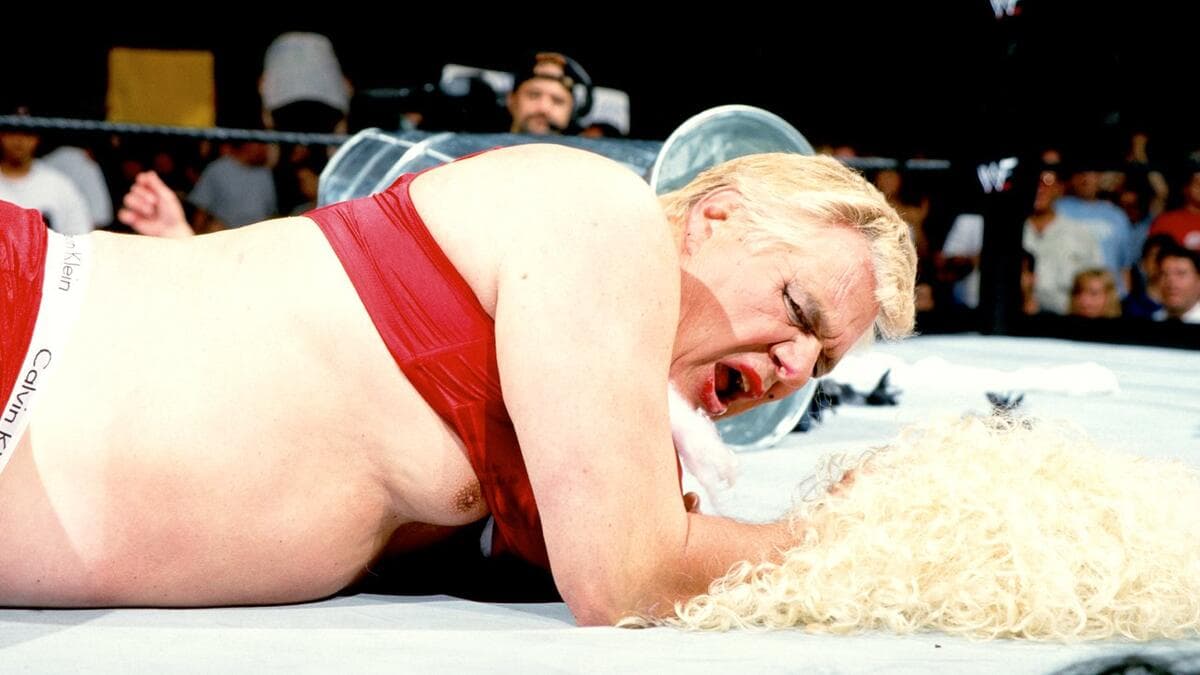
Going forward, the Hardcore Title changed frequently, both on TV and at house shows. It was usually the champion going in that remained champion coming out, even if there were three to six quick title changes in the interim, with a typical formula being interference, pin, chair shot, pin, trash can lid shot, pin, kendo stick shot, pin, another weapon shot, pin, unexpected wrestling move, pin. Back to square one, with nothing gained and nothing lost.
At different points, there would be a different guardian of the division, a designated pro that lorded over the division for a several month stretch. They would usually be the regular champion, even with the expected cluster-changes. The likes of Steve Blackman, Raven, Rhyno, Maven, and Steven Richards took turns ruling the hardcore division for long periods, somehow able to continuously escape arenas with the championship in tow.
Despite the clear devaluation of the belt, bigger names still dipped into the division, like Big Show, Kane, Jeff Hardy, Rob Van Dam, and The Undertaker. In these instances, most of the cliched 24/7 silliness died down, in favour of emphasising more traditional hardcore matches. If nothing else, their appearances as Hardcore Champion did act as palette cleansers to so much disorganised chaos, but only for a little while.
By the time WrestleMania 18 rolled around in 2002, the 24/7 gag had existed for over two years. It remained a gag throughout that night too thanks to a series of title changes that acted as bumpers between official matches, with the show beginning and ending with Maven as champion.
When Maven left the SkyDome as Hardcore Champion that night, it marked the 98th total title change for the belt. Amazingly, there were still 142 more to go over the next five months.
The belt became property of the Raw brand following the first WWE Draft, and the formula didn't change at all. Richards, Bubba Ray Dudley, Bradshaw, and Tommy Dreamer took turns being the belt's guardian over the final five months of its lifespan, following the same pattern of whacky title changes.
Ultimately, the Hardcore Title met its end in August of 2002, as part of the paring down of company belts. It was at Madison Square Garden on the night after SummerSlam that Dreamer lost the belt to old ECW rival Van Dam, who unified the title into his Intercontinental Championship.
While most fans would have agreed that it was time to put the disheveled belt out of its misery, nostalgia for the championship did grow fonder over the decade and a half that followed. This may have been due to the way it gave directionless wrestlers something to do, or the humorous situations that an arena-encompassing scramble could wind up in.
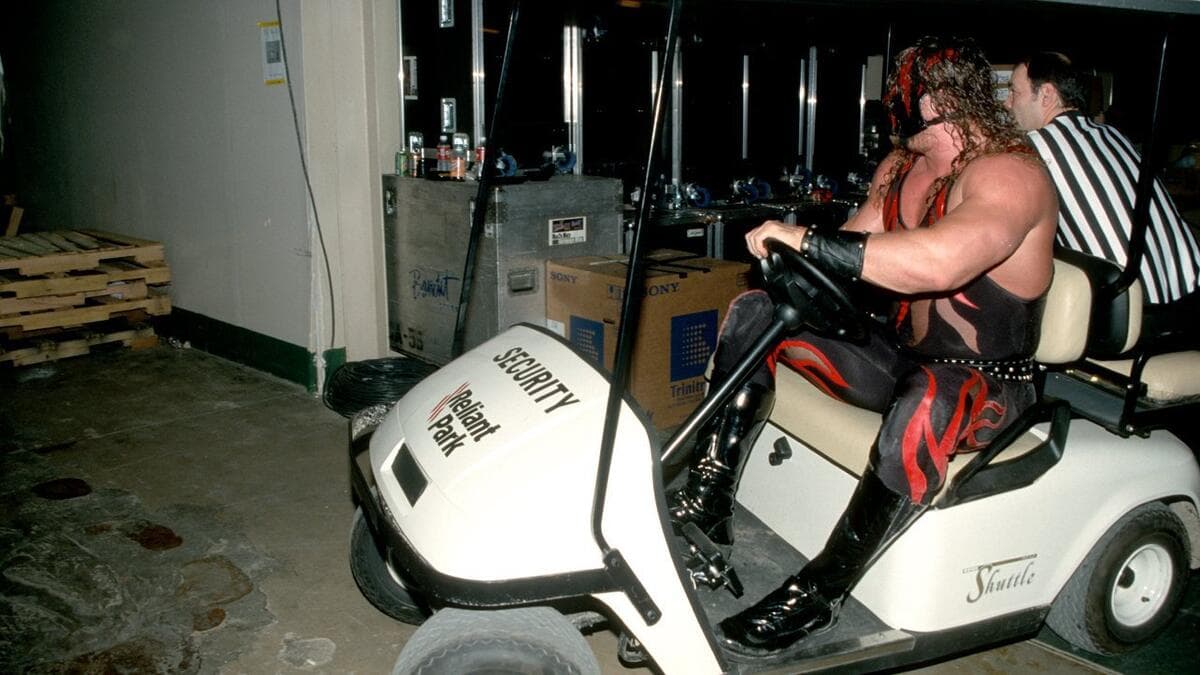
With actual thought put into the titleholders, matches and angles, the Hardcore belt was a valuable prop that gave non-main event wrestlers something to do. It added character dimensions to talented mid-carders and, yes, it also provided us a few genuine laughs like Kane the golf cart driver.
Its success cannot be understated. WCW got in on the act, implementing their own Hardcore division in 1999. It got off to a good start with matches featuring Raven, Bam Bam Bigelow, and Hak (aka The Sandman). However, like most things WCW did in their final couple years, the division mostly felt like a pale imitation of what the WWF were usually doing better.
DDT Pro Wrestling created the Iron Heavymetalweight Title in 2000, following the same comic premise as the 24/7 version of the Hardcore Title, except the Hardcore Title was never won by inanimate objects or Jack The Jobber.
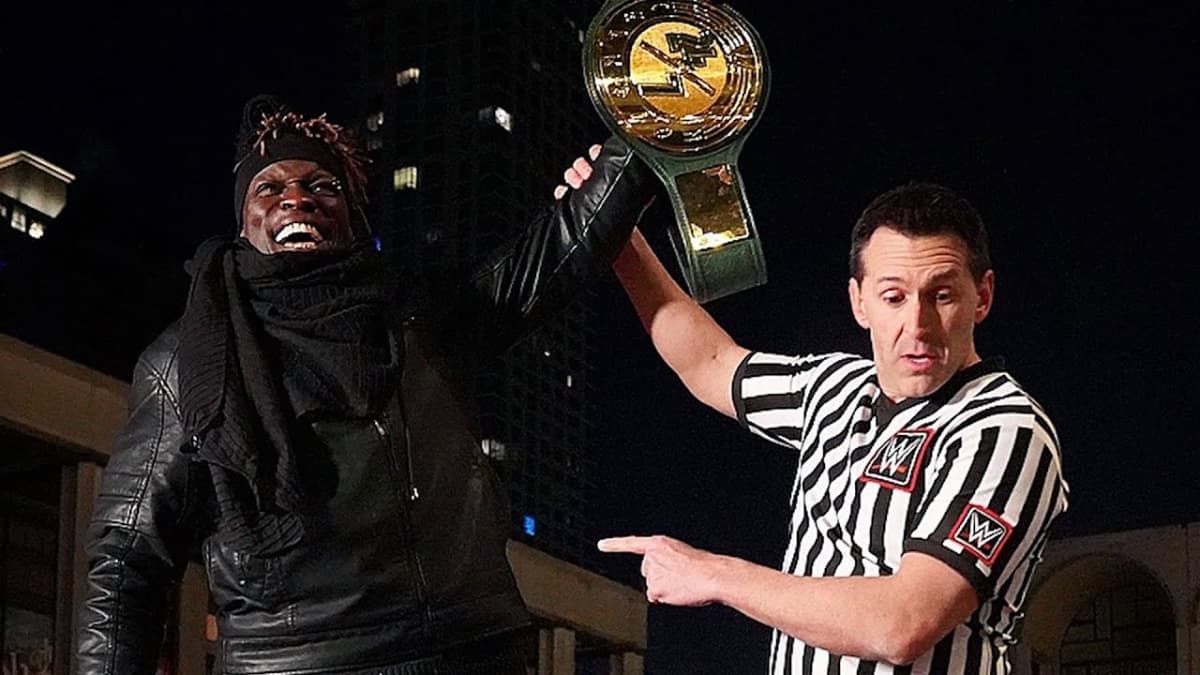
WWE even brought back a version of the Hardcore Title with the creation of the WWE 24/7 Championship by Mick Foley in 2019.
There were inventive moments, like pinfalls taking place at an obstetrician's office, or an airport tarmac, or even in Times Square during New Year's Eve festivities. It also proved to be a nice outlet for the beloved R-Truth to bring comic relief to shows that desperately needed some, but after just one year, the joke had already worn thin and the belt was eventually retired in November 2022 when Nikki Cross put it in a trash can after defeating Dana Brooke for the title.
This came after a WWE creative shake-up which saw Triple H, at least briefly at the time, serve as head of WWE creative in between Vince McMahon’s retirement and WWE comeback from the summer of 2022 until January 2023. Once McMahon was removed from creative for good in September 2023, Triple H didn’t go out of his way to bring the belt back.
The WWE Hardcore Title didn't make it to four years of existence, but it left a lasting impression on fans of its time. Pro wrestling has long valued the novel and the offbeat, because with them comes the chance to do something different. The Hardcore Title may not have been as hardcore as the wrestling term implies, but what it represented at different times brought something unique to the table. It created, it elevated, and most importantly, it entertained.